Research Article | | Peer-Reviewed

Banking Performance During the Global Financial Crisis: Empirical Evidence from Bangladesh

Received: 28 April 2024     Accepted: 29 May 2024     Published: 13 June 2024
Views:       Downloads:
Abstract

Purpose-The Russia-Ukraine conflict and 19 pandemics have severely damaged the world economy. Banking institutions are crucial to the functioning of any economy, and their financial standing is a vital indicator of the economy's stability. Any major development, be it political or economic, has an impact on the banking industry. The dollar rate's volatility and other issues hurt the GDP. Therefore, the study examines banking performance in vulnerable global situations before and during the pandemic. This study utilizes 7 years of panel data to analyze global financial crisis banking performance. Design/methodology- Eight ratios were used to compare the banks' profitability, efficiency, liquidity position, and default risk: return on asset, asset utilization ratio, operational efficiency ratio, debt to asset ratio, loan to deposit ratio, loan to asset ratio, credit risk, and bank size. The descriptive statistics show lower ROA and AUR values for banks, but a lower CR value suggests that pandemic-era borrowers will repay their loans on time. Findings – Due to their reliance on borrowed capital, banks may be more vulnerable to default and financial leverage since they lack the liquidity to meet unforeseen requirements for funds. This is indicated by the higher mean values of DAR, LDR, and LAR. Ratio analysis shows that pre-pandemic banks profited well throughout the pandemic. State-owned banks have a worse position in profitability, efficiency, and default risk but a better position in liquidity in both study periods. Conventional banks placed first in profitability, but Islamishariah-based banks placed first in efficiency, high liquidity risk, and low default risk. Originality –This study will help bank officials find the flaw and prevent it from improving financial performance and recovering from the global crisis. This may assist bank investors and depositors in choosing wisely.

Published in International Journal of Economics, Finance and Management Sciences (Volume 12, Issue 3)
DOI 10.11648/j.ijefm.20241203.14
Page(s) 172-184
Creative Commons

This is an Open Access article, distributed under the terms of the Creative Commons Attribution 4.0 International License (http://creativecommons.org/licenses/by/4.0/), which permits unrestricted use, distribution and reproduction in any medium or format, provided the original work is properly cited.

Copyright

Copyright © The Author(s), 2024. Published by Science Publishing Group

Keywords

Financial Performance, Global Financial Crisis, Ratio Analysis, Conventional Banks, Islami Shariah-Based Banks, State-owned Banks in Bangladesh

1. Introduction
Banking is a solid foundation for any nation's economic growth. Banks are crucial to every nation's financial market. A nation's banking system's robustness is intricately linked to its economy's vitality. Financial institutions are vital to the economyby collecting deposits from surplus units and redistributing those monies to deficit units, promoting regional growth and maintaining financial stability. In the aftermath of the war in Bangladesh, there has been a notable escalation in market rivalry, prompting the banking sector to expand its range of services to retain existing clients and secure a larger market share, thereby establishing itself as a dominant player in the market. However, the journey does not conclude at this point. Banks must be dynamic, research, and develop to survive in this competitive market. Bangladesh Bank oversees and supervises 61 scheduled banks under the Bank Company Act 1991andBangladesh Bank Order 1972. The four sections of these banks are State-owned Commercial Banks (6), Foreign Commercial Banks (9), Private Commercial Banks (43=conventional bank 33+Islami Shariah-based bank 10), and 3 Specialized Banks.6. Bangladeshi banks' intellectual capital (IC) boosts performance. In Bangladesh, capital-employed efficiency is more critical in bank performance than structural and human capital efficiency . Financial institutions have needed help reaching a broad audience for financial services, but they have achieved ground-breaking success by promoting and growing agent banking .
The current study examined fifteen conventional, Islamic shariah-based, and state-owned banks for empirical testing, and a brief overview of these banks reveals that, like traditional banks, they are private commercial banks that carry out their banking roles in a conventional manner, i.e., Interest-driven activities. Simply put, they accept deposits from people who wish to save money and then lend or advance that money to people who need it in exchange for interest. The number of traditional banks currently in operation stands at 33.
Islami Shariah-based banks are private commercial banks as well. However, based on Islami Shariah-based principles, they primarily carry out banking operations following the Profit-Loss Sharing (PLS) mode. Bangladesh is home to ten Islamic Shariah-compliant banks at present. State-owned banks in Bangladesh are commercial banks wholly or predominantly owned by the Government of Bangladesh. Currently, there exist a total of six banks falling inside this particular category.
In the last two decades, a new era has been ushered into the economy of Bangladesh. It broke all the records in the economic sectors, including GDP growth rate, Par-capita income, literacy rate, average life expectancy, etc. The performance of the banking sector was also advancing, synchronizing with the economic development of Bangladesh. However, the world has faced a severe financial crisis in the last three to four years that has affected the world economy adversely, especially the banking sector. The Russia-Ukraine conflict and the COVID-19 outbreak are the two most important events. Several world-renowned commercial banks, including Signature Bank and Silicon Valley Bank of USA, have been bankrupted in the last few months, which has made world economists think again. In that sense, the commercial banks of Bangladesh are not supposed to be free from that risk. Despite the struggles to recover their financial strength, commercial banks still have some complications leading to decreasing financial outcomes.
So, this research aims to look at how well and efficiently some conventional, Islami Shariah-based, and state-owned banks in Bangladesh did financially during the global financial crisis caused by the Russia-Ukraine conflict andCOVID-19 outbreak. Moreover, assessing the profitability, liquidity, and deposit position and comparing the risk and efficiency among those empirical banks before and after the global crisis is also the demanded objective of the study.
2. Literature Review
Financial institutions that fared better before the COVID-19 outbreak were likewise more successful during it. EBL, AIBL, and BBL all outperformed on their fronts nearly totally in both cases. During the COVID-19 pandemic, high rates of non-performing loans, extra liquid assets, hedgingcapital, and incorrect bank size harmed banks' profitability. On the other hand, because of lower leverage and inflation, the bank made more money during this period .
Panel data from 1137 BRICS institutions showed that large banks are more competent than small banks in competitive marketplaces and that competition performance and risk are nonlinear. According to a study, as efficient as giant banks during crises, small institutions share risk and are stable in extremely intense markets but less steady in competitive contexts. .
ROA increases when the capital adequacy ratio is high, but this is not statistically important. Private commercial banks have more excellent Advance-Deposit Ratio, Capital Adequacy Ratio, and Return on Assets than state-owned banks, according to T-test. Conversely, private commercial banks have much lower non-performing loans than state-owned banks. The study discovered that Bangladeshi commercial banks are still apprehensive about steady credit risk, a key indicator of how well a bank will do financially .
Key financial variables affect the baking sector's profitability; thus, policymakers should prioritize rapid economic growth and risk recovery. Islamic banks' financial success is better and more forward-looking than traditional banks. Islamic banks' ROE and ROA positions are expanding faster than conventional banks. Islamic banks also have more earnings per share than their conventional counterparts .
A study aimed to scrutinize and conjecture the economic sustainability and flexibility of commercial banks in response to the adverse belongings of the COVID-19 epidemic in Bangladesh found that based on the performance scores under HELLWIG and TOPSIS methods, DBBL and EBL are the utmost resilient banks, and ONE BANK is the wickedest resilient bank in dealing the COVID-19 epidemic shudder .
During COVID-19, financial operations encountered a challenging circumstance. CSR represents a responsibility to the community. Dutch-Bangla Bank Limited and Islami Bank Bangladesh Limited are the top providers of CSR money for 2018–2019, according to a study of the CSR initiatives of ten banks conducted between 2018 and 2021. In 2020–2022, IBBL and EXIM Bank were the top contributors during the COVID. CSR's contribution has steadily risen since the COVID-19 outbreak began .
A CAMEL test revealed that, except for management quality, regular private commercial banks and Islamic banks in Bangladesh performed similarly. In Bangladesh, Islamic banks outperform traditional private commercial banks regarding capital sufficiency and liquidity position, while conventional banks do better regarding asset and managerial quality. According to a study from 2015 to 2019, Islamic banks' capital adequacy ratios have an improving trend, while asset quality shows no appreciable variances .
The liquidity and financial soundness of Bangladeshi listed banks decreased after the COVID-19 outbreak, according to a study. Compared to commercial banks, Islamic banks are in worse financial shape, and all of them are consistently in the red zone.
Another study found that Islamic banks have less cash than regular banks. Both types of banking are comparable, except for liquidity. In the chosen period, Exim Bank Limited and Al-Arafah Islamic Bank Outperformed Islamic banks, and Dutch-Bangla Bank Limited and Mercantile Bank Limited topped conventional banks.
After doing the CAMEL Rating Analysis, all selected Islamic Banks had composite solid ratings. They meet all criteria for soundness, including managerial quality, asset quality, capital adequacy, liquidity conditions, and earning potential.
In the banking industry, financial stability is of paramount importance. Market concentration and income diversity in the global financial system have confident and nonlinear effects on financial solidity and adverse and non-linear effects on bank risk, according to research conducted by 206 nations between 1994 and 2015. The banking sector has lower soundness levels and higher hazards .
These days, everyone is talking about fintech. Fintech, such as machine learning, AI, block chain, and other policymaking layers, benefits the banking sector, but it also has drawbacks like overreliance on increased unemployment, technology, high costs, fraud, and personal data security risks .
Liquidity risk is not affected by the investment-to-asset ratio, according to a survey of selected private banks, but is affected by the return on equity ratio. Liquid asset ratios, investment in assets, return on equity, and liquidity risk all impact each other. Liquid asset ratio is one factor that affects liquidity risk. Compared to public banks, private banks are more fluid and riskier. The debt-to-equity ratios of private banks are lower than those of public banks. The private sector should reduce its liquidity risk. Additionally, public banks must lower their debt-to-equity ratio.
In comparison to public banks, private banks significantly outperform them in responsiveness and assurance, according to a study from Ethiopia, although there is still room for development. Compared to public banks, private banks have much better service quality in terms of how quickly they respond and how sure they are, but they still have a long way to go.
Internal performance measured by return on assets, market performance measured by Tobin's Q model (price/book ratio), and economic performance measured by monetary value add all show that credit risk, operational efficiency, bank size, and asset management have a significant impact on the financial performance of Bangladeshi commercial banks.
Using regression analysis, a study determined that public commercial banks in Nepal are less efficient than private commercial banks. From 2005 to 2010, none of the banks met the capital adequacy standard, which should be 19.5% of all risk-weighted assets. The CDR for the publicly traded banks reveals that their level of liquidity was below the threshold. Due to significant cumulative losses and capital below the required level in Nepal's public banks, the results demonstrate that ROA was adversely linked with IETTL (-0.251), CDR (-0.279), and CAR (-0.478). Political involvement, lousy management, high overhead costs, and inadequate collateral quality deteriorated public sector banks' financial health.
In Bangladesh, Islamic banking is still in its infancy, which explains why it has a small market share compared to conventional financial institutions. By cutting back on non-expenses and liabilities, ratio analysis research, Z test analysis, and descriptive analysis propose that banks should spend their capital in extra profitable industries. To increase active income, banks should lower their running costs.
Although Islamic banks are less efficient than conventional banks, they are better capitalized, have higher asset quality, and have higher intermediation ratios. Islamic banks performed better in asset quality and capitalization during a financial crisis. Surprisingly, the zakat ratio performance measurement does not indicate a financial crisis effect on banking performance.
Private banks are more financially stable than their public sector counterparts. Except for the Return on Assets, Provision coverage ratio, and Deposit ratio, a study of ten Indian private and public banks indicated that private banks earn more money than public banks.
3. Methodology
3.1. Population, Sample Size, and Date Set
The study encompasses all scheduled commercial banks, including state-owned, conventional, and Islamic Shariah-based banks and three specialized banks operating in Bangladesh. The representative sample size is fifteen, comprising five state-owned, five traditional, and five Islamic Shariah-based banks. The panel data spans seven years, from 2016 to 2022. This study split the time into two parts for analysis. The first part covered 2016 through 2019 and was labeled the pre-pandemic period. The second part covered 2020 through 2022 and was labeled the pandemic period. The banks are selected randomly. The list of the selected banks is given below:
Table 1. Sample size.

Conventional banks

Acronym

IslamiShariah-based banks

Acronym

State owned banks

Acronym

Mercantile Bank Ltd.

MBL

Islami Bank Bangladesh Ltd.

IBBL

Sonali Bank Ltd.

SBL

Dutch-Bangla Bank Ltd.

DBBL

Shahjalal Islami Bank Ltd.

SIBL

Janata Bank Ltd.

JBL

BRAC Bank Ltd.

BBL

Union Bank Ltd.

UBL

Rupali Bank Ltd.

RBL

IFIC Bank Ltd.

IBL

EXIM Bank Ltd.

EXIMBL

Agrani Bank Ltd.

ABL

National Credit & Commerce Bank Ltd.

NCCBL

First Security Islami Bank Ltd.

FSIBL

Bangladesh Development Bank Ltd.

BDBL

Source: Authors’ Illustration
Since this is a study based entirely on secondary data, all the information came from publicly available sources, such as the financial statements and annual reports of the selected banks and the Bangladesh Bank's website. Eight interrelated ratios have been used here to compare the profitability, efficiency, liquidity position, and default risk of the studied banks that are given below:
Table 2. Data set.

Financial performance

Ratios

Acronym

Calculation methods

Profitability

Return on asset

ROA

Net income÷ Total asset

Asset utilization ratio

AUR

Reserves for doubtful loans ÷ total loans and advances

Efficiency

Operating efficiency ratio

OER

Total operating expenses ÷ Net interest income

Liquidity position

Debt to asset ratio

DAR

Total Liabilities÷ Total Assets

Loan to deposit ratio

LDR

Total loans and advances ÷ Total deposit

Loan to asset ratio

LAR

Total loans and advances ÷ Total asset

Default risk

Credit risk

CR

Reserve for doubtful loan ÷ Total loan and advances

Bank size

BS

Ln (Total Asset)

Source: Authors’ Illustration
3.2. Data Analysis Method
The quantitative research approach is used to compare the financial performance of the chosen commercial banks because the data is secondary. Descriptive statistics and ratio analysis were used to compare and examine the banks' financial performance and efficiency, and SPSS 22 and Microsoft Excel were used to produce the output. The study used descriptive statistics to compare the financial performance of the selected banks, and ratio analysis was used to compare and observe the significant differences in outcomes individually and collectively between pre- and post-pandemic periods.
3.3. Analysis and Interpretation
Descriptive Statistical Analysis
The study's descriptive statistics (Table 3) indicate all mentioned banks' pre- and post-pandemic financial statuses. This analysis found that banks' mean ROA and AUR values declined throughout the pandemic, indicating weaker profitability, while their negative OER values indicated net interest losses.
Notably, the lower CR value tells the writers that the bank's borrowers are likely to repay their loans on schedule without defaulting. This bodes well for the study. On the other hand, DAR, LDR, and LAR have increasing mean values, indicating that banks lack liquidity to cover unexpected cash requirements and rely primarily on borrowed capital, which accelerates financial leverage. This is very alarming for the bank’s financial strength.
Table 3. Descriptive Statistics.

Pre-Pandemic period (2016-2019)

Pandemic period (2020-2022)

Variables

N

Minimum

Maximum

Mean

Std. Deviation

N

Minimum

Maximum

Mean

Std. Deviation

Return on asset

60

-.0112

.0183

.0065

.00545

45

.0001

.0130

.0052

.00374

Asset utilization ratio

60

.01936

.07522

.0386

.01344

45

.017475

.0626002

.0328

.01182

operating efficiency ratio

60

-4.8824

24.0142

1.457

3.8500

45

93.2780

43.53708

-.1719

16.135

Debt to asset ratio

60

.66569

.96577

.9180

.06853

45

.655647

.9756161

.9242

.07162

Loan to deposit ratio

60

.37481

1.1151

.8316

.17273

45

.467148

1.107646

.8632

.15744

Loan to asset ratio

60

.30480

.83936

.6478

.15701

45

.369220

.849933

.6553

.13720

Credit risk

60

.00005

.03029

.0052

.00613

45

.000009

.0095900

.0033

.00273

Bank size

60

10.7375

12.16834

11.5365

.34303

45

10.7477

12.26436

11.7048

.36290

Source: Authors’ Illustration from SPSS Result
Ratio Analysis
This study used ratio analysis to compare the financial performance, profitability, liquidity position, deposit position, etc. of the selected banks pre- and post-pandemic. It also observed major differences in outcomes. Multiple ratios have been used here for the analysis purpose and the ratio results and interpretations are shown part by part through the following tables (from table 4 to table 11).
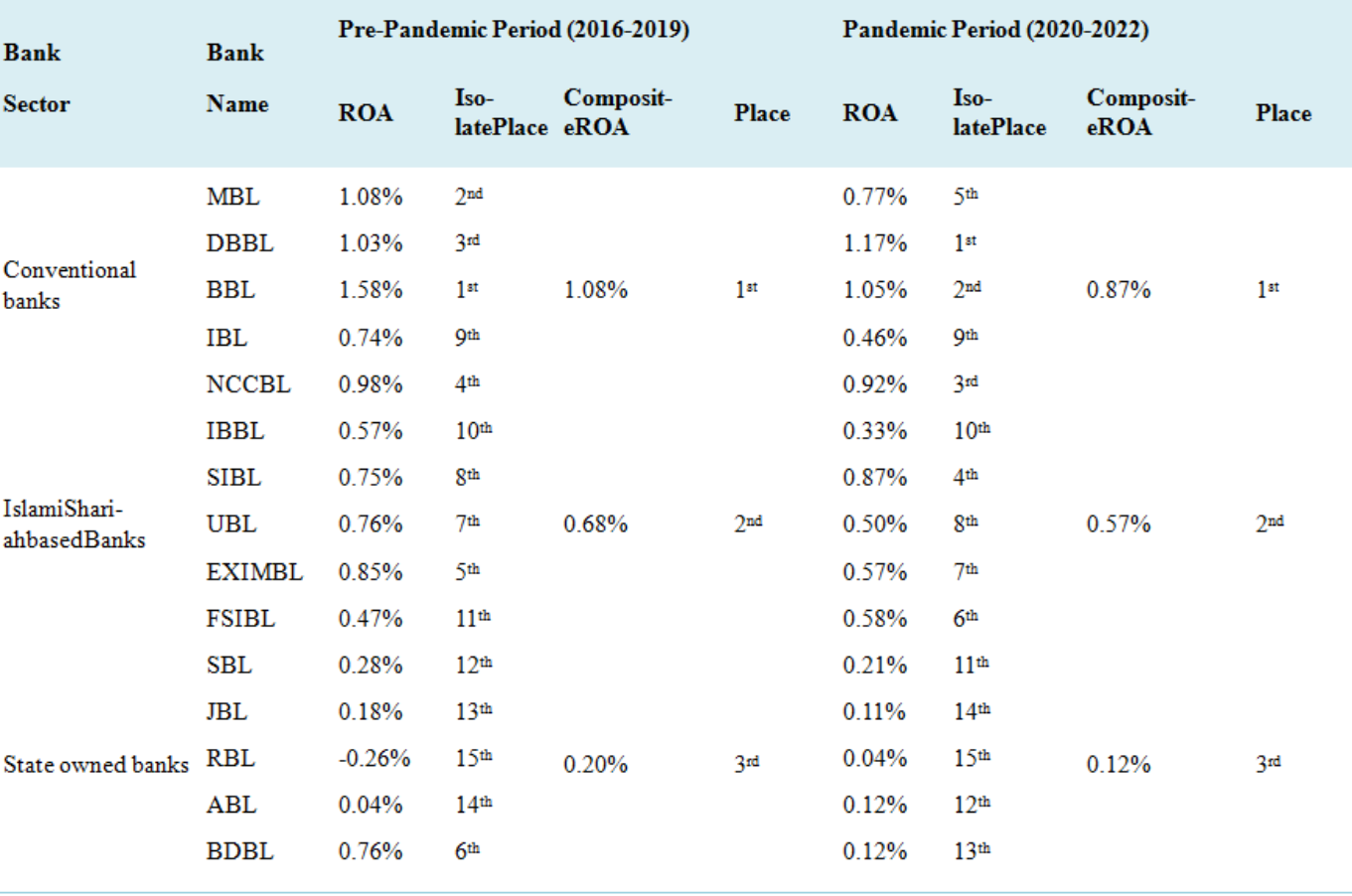
Table 4. Return on asset (ROA).
Source: Authors’ Illustration from SPSS Result
Interpretation: The return on asset ratio measures a company's efficiency in generating profit from its total assets. A more excellent ratio indicates better corporate performance.
Table 4 indicates that in individual performance, BBL, MBL, and DBBL were in 1st,2nd, and 3rd position, respectively. In contrast, RBL was the last in the series and showed a negative return before the pandemic. On the other hand, DBBL, MBL, and NCCBL held 1st, 2nd, and 3rd positions, respectively, during the pandemic period. Here, the RBL again has the last place on the list, though its return became positive. In combined performance, the conventional banking sector holds the 1st position, showing the highest rate of return, and state-owned banks remain in the third position.
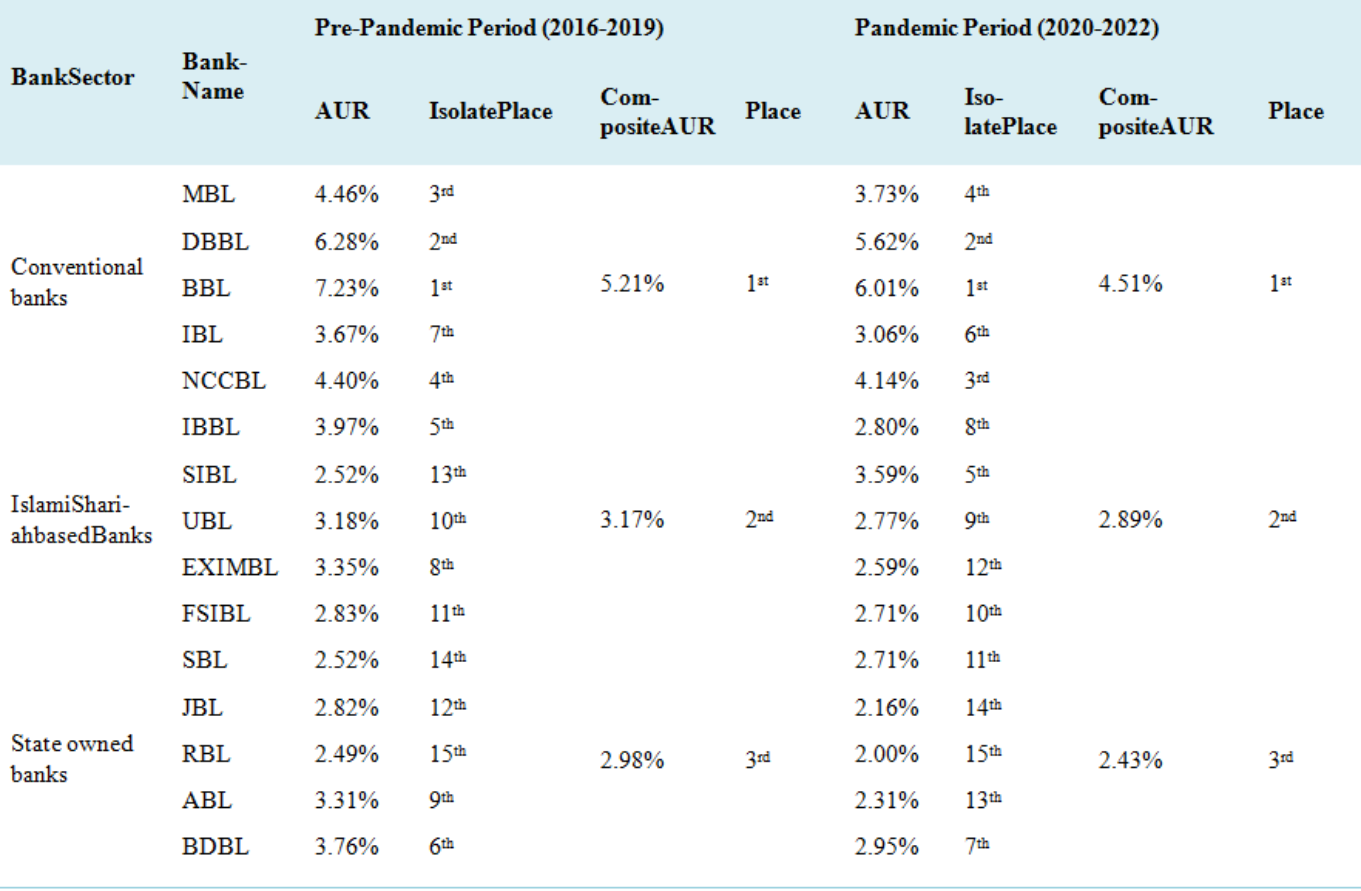
Table 5. Asset Utilization Ratio (AUR).
Source: Authors’ Illustration from SPSS Result
Interpretation: A high asset turnover ratio suggests the bank is efficient and makes more per dollar. A low asset turnover ratio indicates the bank needs to be better at using its resources and may struggle.
Table 5 shows that the BBL and DBBL generate more revenue per dollar of asset because they have the highest AUR and rank 1st and 2nd in individual performance both pre- and post-pandemic, even though their AUR value has decreased. The state-owned bank RBL holds the last position in this case, showing poor efficiency in both periods, which is very alarming for that bank. Again, considering the composite ratio, the conventional banking sector's performance is better than that of Islamic Shariah-based or state-owned banks.
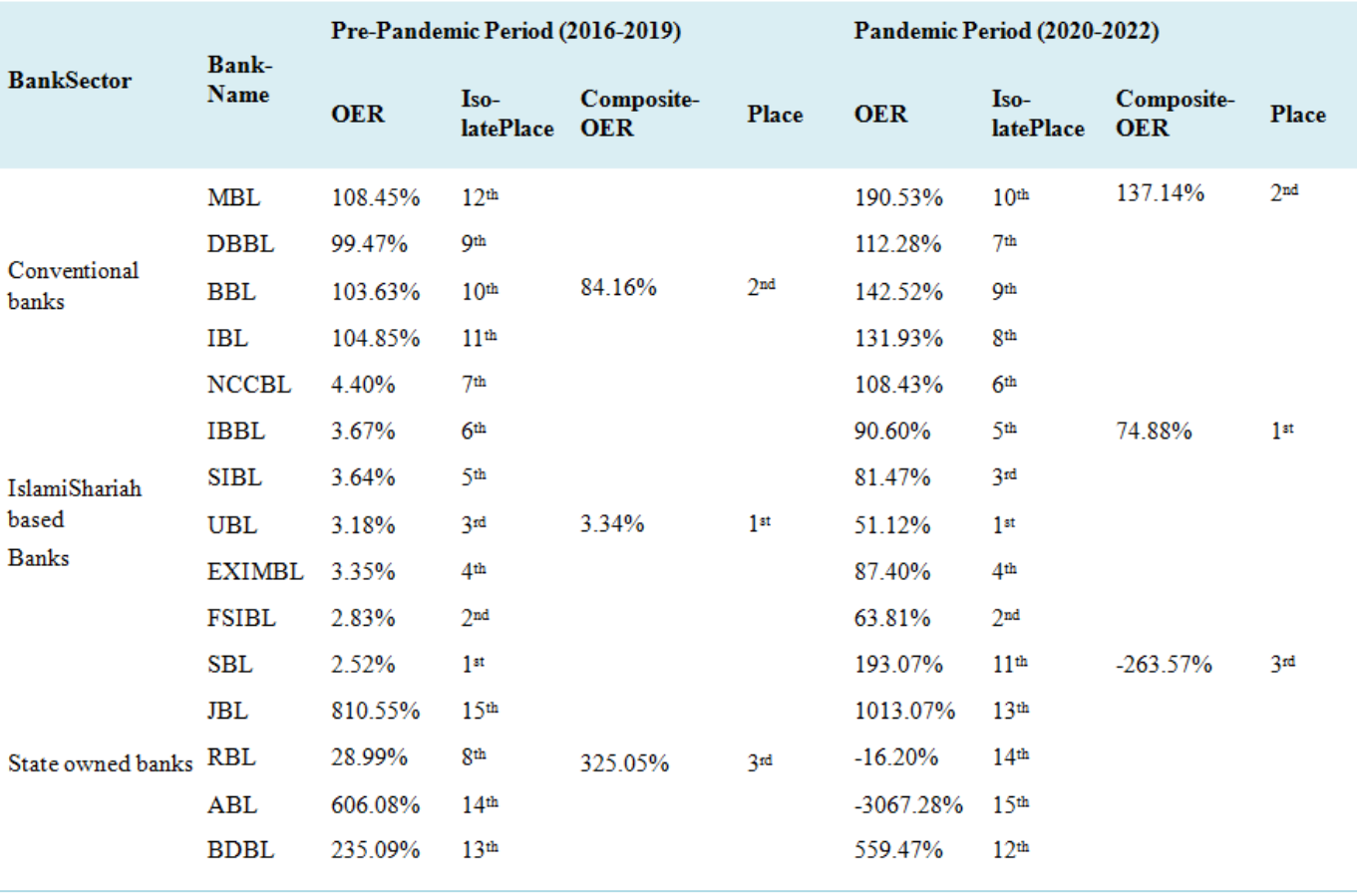
Table 6. Operational Efficiency Ratio (OER).
Source: Authors’ Illustration from SPSS Result
Interpretation: The operating ratio, or operational efficiency ratio, indicates how well the bank is performing. A lower ratio indicates the bank spends less to make more money. An efficiency ratio under 50% is ideal. An increasing efficiency ratio indicates rising expenses or falling revenues for a bank. However, a negative efficiency ratio indicates a bank's net interest loss.
Table 6 shows that Sonali Bank Ltd. was in the first position, and its operational efficiency ratio was excellent before the pandemic. The second and third positions were in the hands of two Islami Shariah-based banks, First Security Islamic Bank Limited and Union Bank Limited, respectively, in this category. Three state-owned banks, BDBL, ABL, and JBL, were last in the line. In terms of combined performance, the Islami Shariah-based banks were in the first position, and the ratio value was satisfactory.
In the pandemic period, all the bank's OE ratio has increased above 50%, which shows their poor financial performance. Most importantly, the state-owned banks are in a dangerous position, and the Islami Shariah-based Banks are in a good place comparatively in their individual and combined performance.
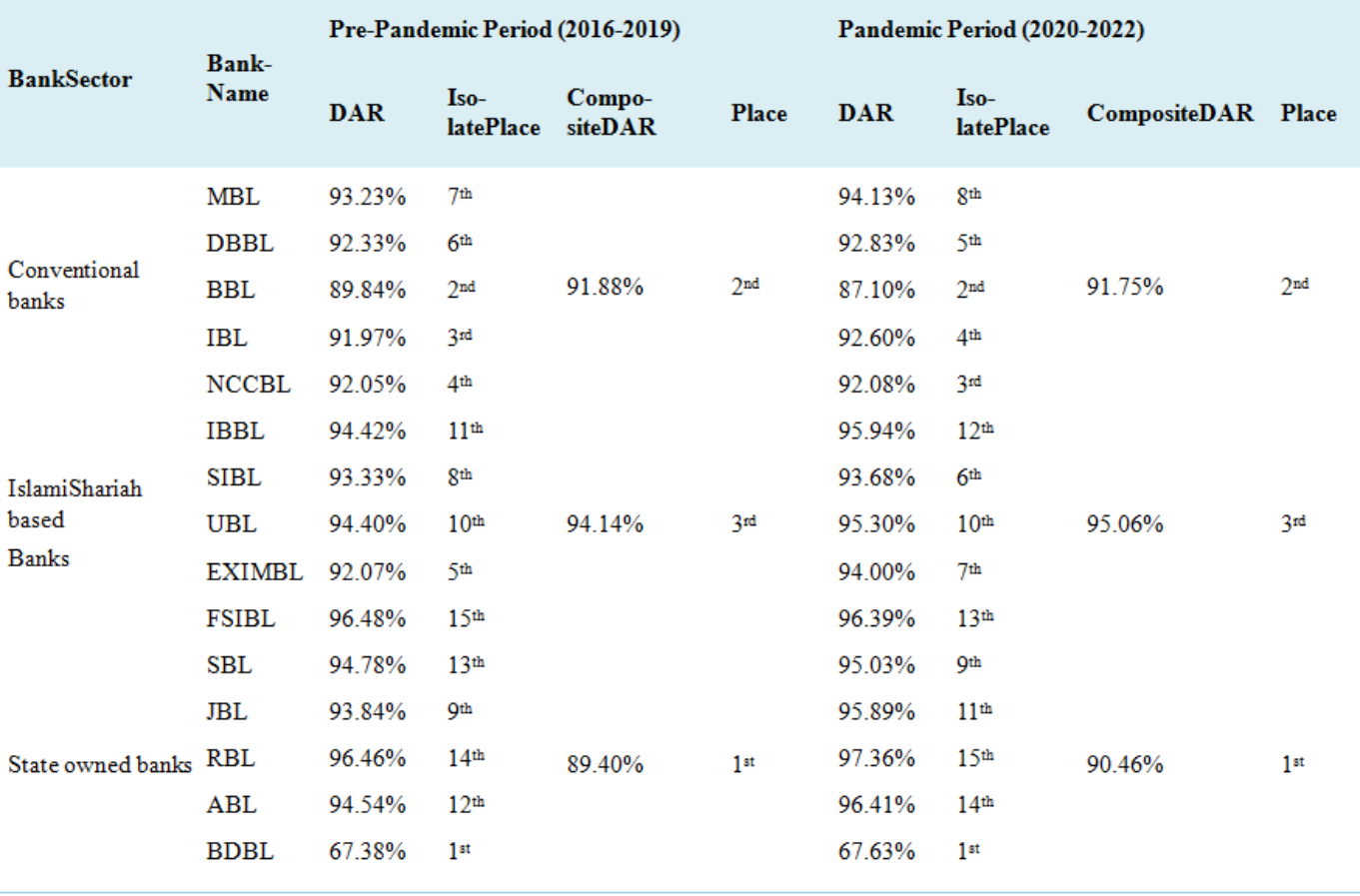
Table 7. Debt to Asset Ratio (DAR).
Source: Authors’ Illustration from SPSS Result
Interpretation: The corporation benefits from a lower debt-to-asset ratio. A 100% ratio means the company's liabilities equal its assets. It signifies high business leverage. If the ratio is below 100%, the corporation has more assets than liabilities.
Table 7 shows that BDBL, BBL, IBL, and NCCBL have excellent debt-to-asset ratios pre- and post-pandemic, while FSIBL and RBL have weaker ratios. With the lowest leverage pre- and post-pandemic, state-owned banks fare well.
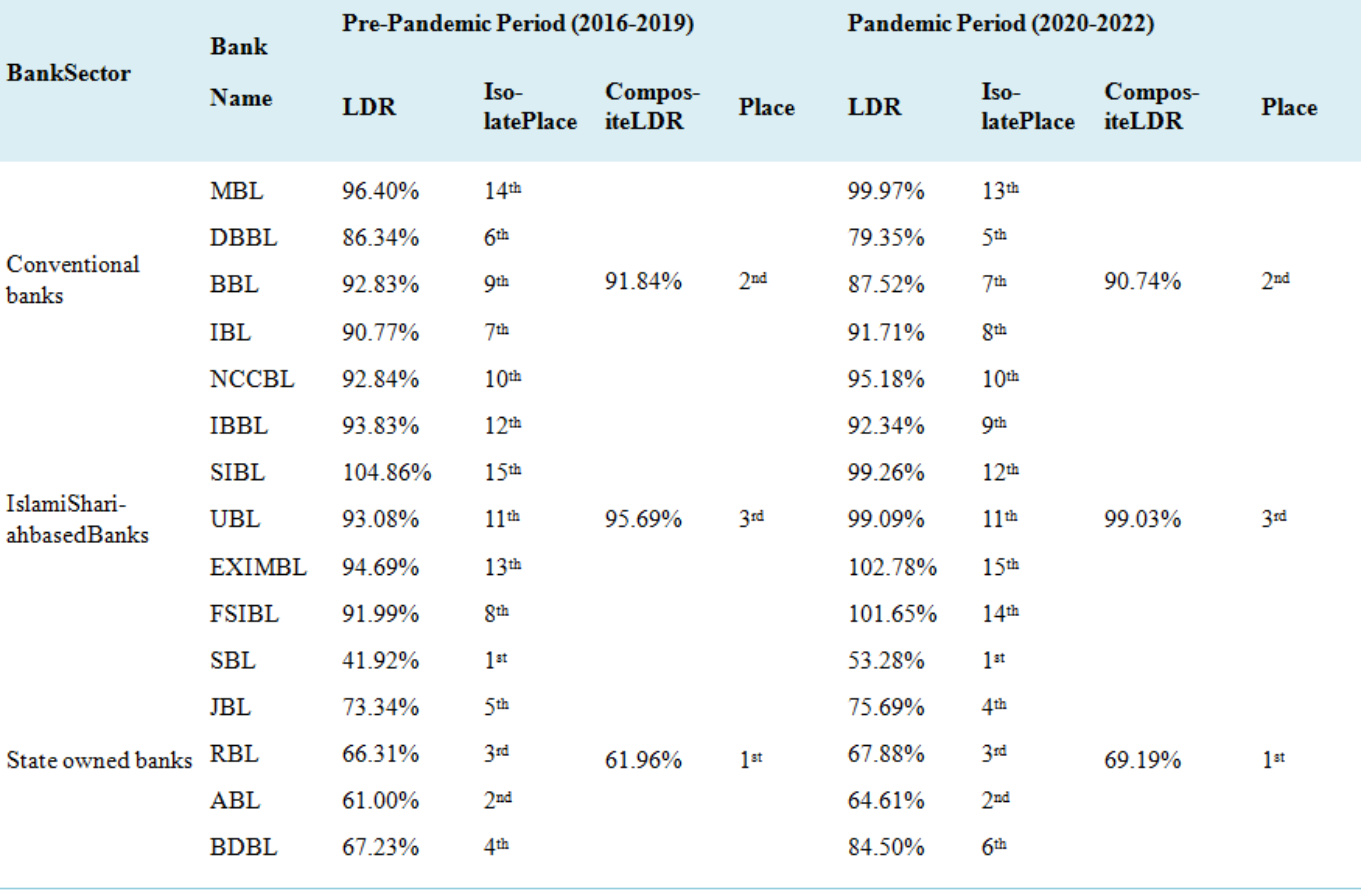
Table 8. Loan to Deposit Ratio (LDR).
Source: Authors’ Illustration from SPSS Result
Interpretation: The loan-to-deposit ratio assesses a bank's liquidity by comparing loans to deposits. This ratio measures a bank's liquidity, risk, fund utilization, and intermediation operations. A high ratio indicates the bank is riskier because it has fewer cash reserves to cover unexpected losses and vice versa. This could also mean the bank borrows extensively from other institutions to fund its lending, which is problematic during economic volatility.
Table 8 shows that before the pandemic, the five state-owned banks held the top position compared to conventional and Islami shariah-based banks in their individual and combined performance. The scenario does not change significantly during the pandemic except for the increased ratio values. So, the authors can conclude that the conventional and Islamic Shariah banks are suffering from a liquidity crisis and taking a higher risk in loan disbursement than the state-owned banks.
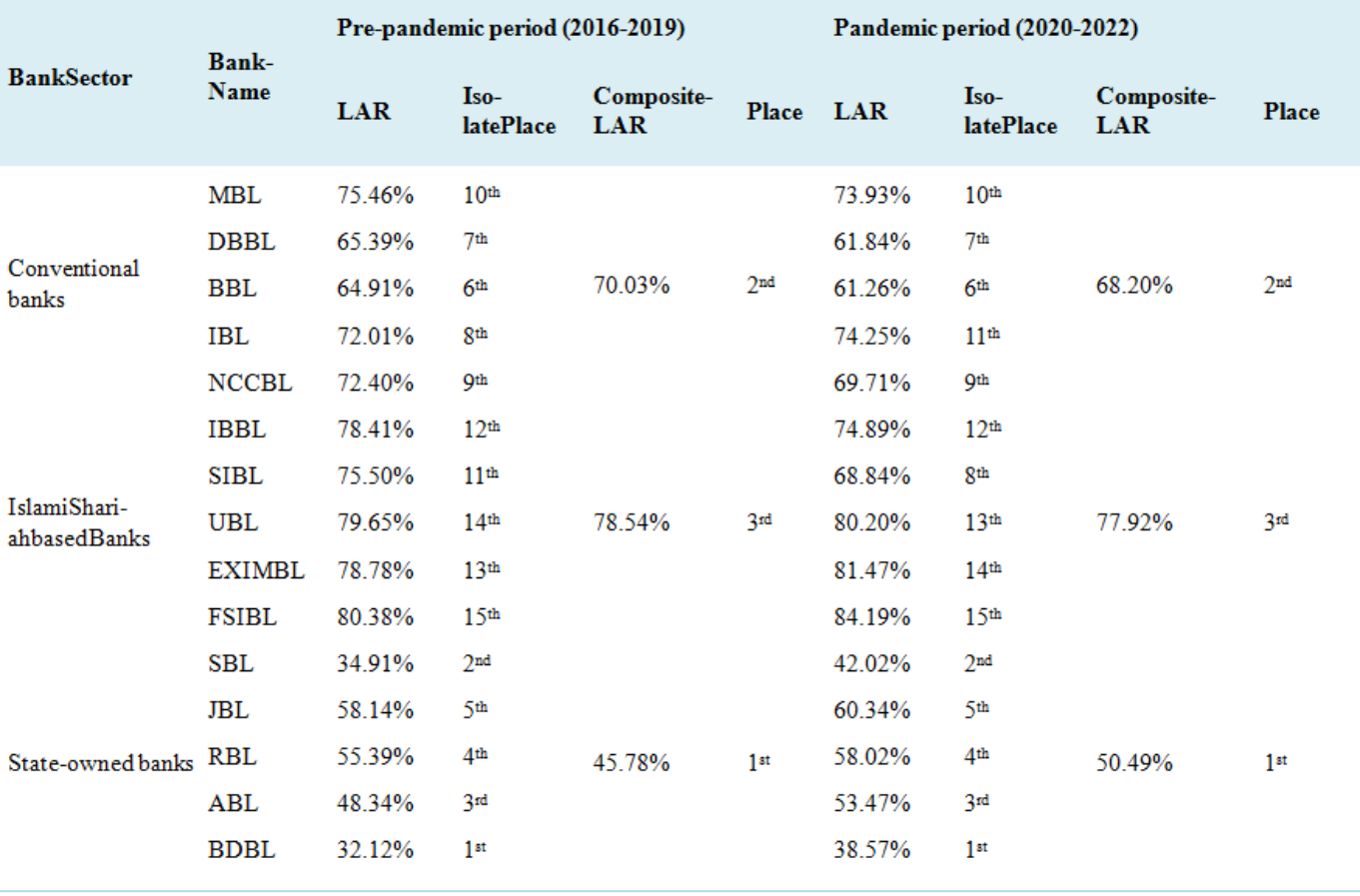
Table 9. Loan to Asset Ratio (LAR).
Source: Authors’ Illustration from SPSS Result
Interpretation: The essential measure of the asset composition of a bank quickly shows what percentage of the bank's assets is dedicated to loans. A higher rate indicates a lower bank liquidity position exposed to higher default risk. Banks with lower loan-to-asset ratios may do better during recessions. Looking at Table 9, the study can argue that the LAR reveals an identical performance with LDR. Here, the state-owned banks again show better performance and hold a higher liquidity position than the other two sector banks in their individual and group performance in both periods.
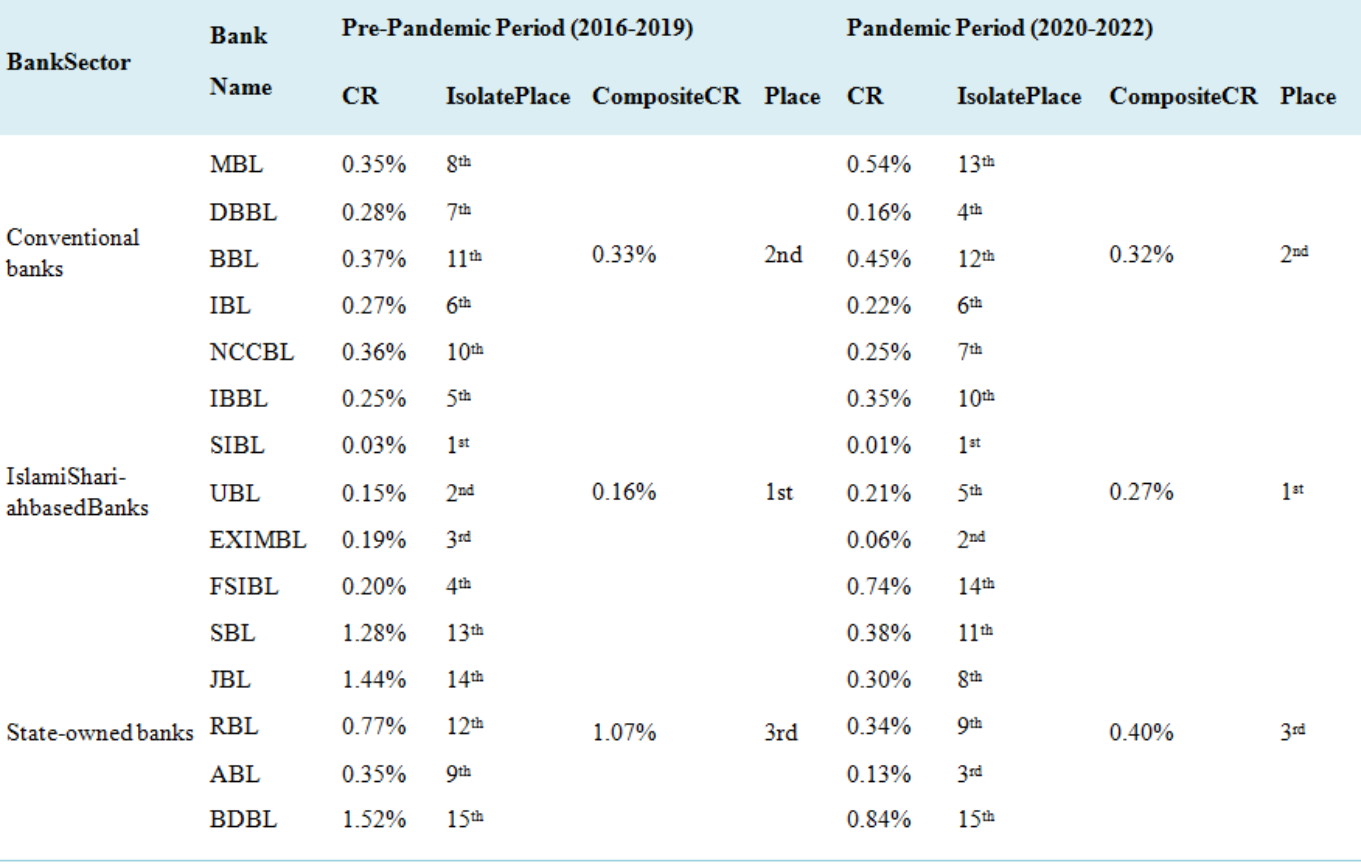
Table 10. Credit Risk(CR).
Source: Authors’ Illustration from SPSS Result
Interpretation: Credit risk means customers may delay or not make payments, directly affecting a bank's profitability and stability. High levels of credit risk can lead to increased default rates, loan losses, and reduced profits. It can also impact a bank's capital adequacy and overall financial health.
Table 10 shows that state-owned banks have higher default risk both pre- and post-pandemic, so the regulatory authority should consider this situation more significantly. ABL has strictly controlled its credit risk during the pandemic, ranking third compared to 9th in pre-pandemic. This is a good sign of the study. Not only that, all the state-owned banks have also shown better performance during the pandemic period in controlling credit risk, affecting their composite performance positively. However, the Islami Shariah bank achieved first in this criterion in both periods, though their combined performance worsened comparatively during the global crisis. In contrast, the conventional banks held the second position in both periods, and the ratio value was almost unchanged.
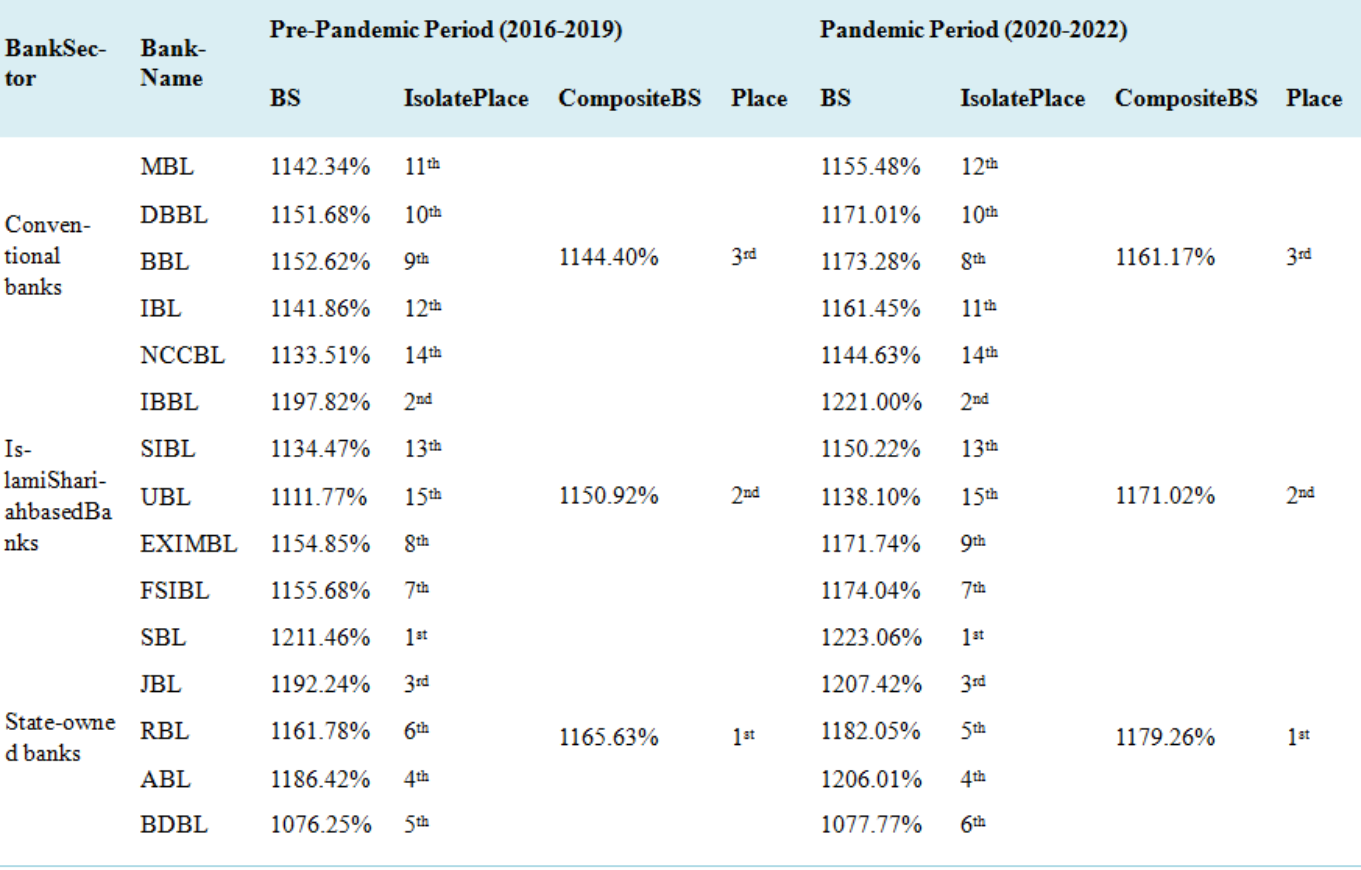
Table 11. Bank Size (BS).
Source: Authors’ Illustration from SPSS Result
Interpretation: Bank size is the natural logarithm of its assets. Large banks are riskier and more complex than small banks due to lesser capital, less steady funding, and more market-based activities. Again, massive bank failures harm an economy's financial system more than small bank failures. One must recognize giant banks' economies of scale potential. As a result, it isn't easy to specify the optimal bank size as it depends on several interrelated factors.
Table 11 exhibits that Sonali Bank Limited is the prime bank in the economy in terms of its total asset both in the pre-pandemic and pandemic period, where Islami Bank Bangladesh Limited and Janata Bank Limited holds 2nd and third position, respectively, and unfortunately, these three large banks have higher credit risk in both periods (in table 10) hence the failure of these banks may make the economy of Bangladesh more vulnerable. Union Bank Limited is the smallest bank in the country, holding low default risk (in Table 10) in both subsequent periods.
4. Study Limitations & Future Research Scope
Some limitations of the study include using mainly secondary data due to time restrictions. Bank staff interviews that could have improved internal performance have proven impossible. The sample size of only 15 banks, which covers data from seven years, may need to be more generalizable. The study paper's validity could be improved by increasing sample size and time. The correctness of research conclusions relies on the accuracy of secondary data from data sources, as the research relies solely on secondary data.
A thorough comparison analysis of state-owned, conventional, and Islamic banks based on Shariah can be carried out to comprehend the current situation of the bank's financial health position. Again, introducing new factors (other performance indicators) that can significantly affect bank financial performance may improve research accuracy. In the future, researchers should also look at regional differences between the city and countryside branches of the studied banks to find out which parts make money and which don't.
5. Conclusion
COVID-19 has caused an eternal financial crisis for the international economy, and the Russia-Ukraine conflict has made it worse. The Russian-Ukrainian conflict has exacerbated the global financial crisis triggered by COVID-19. This will be considered as a historic event in the upcoming days indisputably. Constant lockdowns, restrictions on public activity, a slowdown in output, a drop in consumer demand, and international trade hurdles are just a few of how it has impacted the behavior of the world's financial sector. A COVID-19 pandemic study found a strong correlation between financial factors, business contracts, stakeholders, and FRD practices. Additionally, it has been shown that there is no discernible connection between financial reporting and disclosure practices and firm functioning or business value.
The banking sector is not beyond this situation. Banks connect shortage and surplus units. Women entrepreneurs have significantly contributed to economic growth but have needed help applying for bank loans. Women faced numerous barriers to loan taking, including discrimination based on gender, education, and employment.
Multiple research works have been conducted on the stability of the banks, financial health position, and liquidity in Bangladesh during the pandemic period of COVID-19. Still, little research has yet been conducted to quantify the impact of the Russia-Ukraine war and COVID-19 on the banks’ profitability, efficiency, and default risk and make a comparison among the performance of conventional, IslamiShariah and state-owned banks before the pandemic and during the pandemic situation. For that reason, the authors have chosen the title.
The empirical result shows that most of the banks’ profitability and efficiency decreased in the pandemic period compared to the pre-pandemic period; primarily state-owned banks stand in a vulnerable situation, most importantly RBL, where private sector banks, namely BBL and DBBL, are in a strong position in earning profit and Islamishariah based banks are most efficient in asset utilization in both the subsequent periods.
From the viewpoint of default risk, BDBL stands in a precarious position, and the other state-owned banks are not beyond this risk. Still, the good sign is that they started recovering from the situation during the pandemic. IslamiShariah-based Banks hold low default risk, especially ShahjalalIslami Bank Limited.
Interestingly, the liquidity position of state-owned banks is powerful, especially Bangladesh Development Bank Limited (BDBL), which achieved the highest score in this category. Unfortunately, Islamic Shariah banks are the last in the line.
This investigation will help the banking community locate the chink and take preventive steps to boost financial performance and recover from the worldwide crisis.
References
[1] Agarwal, D. P., & Kassahun, Z. W. (2017). ASSESSMENT OF SERVICE QUALITY OF PUBLIC AND PRIVATE BANK IN WOLAITA SODO, ETHIOPIA: A COMPARATIVE STUDY. International Journal of Marketing & Financial Management, 33-42.
[2] Ahmed, A., Sultana, M. & Karmakar, A., 2022. Uncovering the Extent of Social Responsibility of Private Commercial Banks: A Comparative Study on CSR Activities during COVID Pandemic. European Journal of Business and Management, 14(20).
[3] Ahsan, M. K. (2016). Measuring Financial Performance Based on CAMEL: A Study on Selected Islamic Banks in Bangladesh. Asian Business Consortium | ABR, 47-56.
[4] Akber, S. M., & Dey, A. (2020). Evaluation of the Financial Performance between Traditional Private Commercial Banks and Islamic Banks in Bangladesh. International Journal of Islamic Banking and Finance Research, 1-10.
[5] Akter, A., 2023. Does intellectual capital affect bank performance? Evidence from Bangladesh. LBS Journal of Management & Research, 21(2), pp. 171-185.
[6] Chakrobortty, T. and Sultana, M., Financial Inclusion for Rural Community in Bangladesh through Agent Banking. IJFMR-International Journal For Multidisciplinary Research, 5(3).
[7] Das, P. C., & Noor, P. (2019). Impact of Credit Risk Management on Financial Performance: Panel Evidence from State-Owned and Private Commercial Banks in Bangladesh. THE COST AND MANAGEMENT.
[8] Gazi, D. M., Talukder, M., Molla, M., Hossain, D., & Hossain, A. I. (2022). DOES THE FINANCIAL PERFORMANCE OF ISLAMIC BANKS ARE HIGHER THAN THE TRADITIONAL BANKS IN BANGLADESH? PANEL DATA ANALYSIS. Indian Journal of Finance and Banking, 33-46.
[9] Gazi, M. A., Nahiduzzaman, M., Harymawan, I., Masud, A., & Dhar, B. K. (2022). Impact of COVID-19 on Financial Performance and Profitability of Banking Sector in Special Reference to Private Commercial Banks: Empirical Evidence from Bangladesh. Sustainability, 2-23.
[10] Ghosh, R. & Saima, F. N., 2021. Resilience of commercial banks of Bangladesh to the shocks caused by COVID-19 pandemic: an application of MCDM-based approaches. Asian Journal of Accounting Research, 6(3), pp. 281-295.
[11] Hossain, S. A., Islam, M., Mahmud, M., & Islam, K. (2017). Evaluation of Financial Performance of Commercial Banks in Bangladesh: Comparative Study Based on CAMEL Approach. The Millennium University Journal, 54-77.
[12] Jha, S., & Hui, X. (2012). A comparison of financial performance of commercial banks: A case study of Nepal. African Journal of Business Management, 7601-7611.
[13] Karmakar, A., Habib, S. N. & Ahmed, A., 2018. Socio-Economic Factors Affecting the Perception of Women Entrepreneurs towards Bank Loan: A Study on Rajshahi City. Asian Business Review, 8(3), pp. 105-114.
[14] Karim, R. A., & Alam, T. (2013). An Evaluation of Financial Performance of Private Commercial Banks in Bangladesh: Ratio Analysis. Journal of Business Studies Quarterly, 65-77.
[15] Karim, M. R., Shetu, S. A. & Razia, S., 2021. COVID-19, liquidity and financial health: empirical evidence from South Asian economy. Asian Journal of Economics and Banking, 5(3), pp. 307-323.
[16] Lalon, R. M., & Naher, N. (2020). An Empirical Analysis on Liquidity Management of Commercial Banks in Bangladesh: A Comparative Study Between State-Owned and Private Commercial Banks. Journal of Economics and Business, 299-312.
[17] Mohammed, S. A. S. A.-N. & Muhammed, D. J., 2017. Financial crisis, legal origin, economic status and multi-bank performance indicators: evidence from Islamic banks in developing countries. Journal of Applied Accounting Research, 18(2).
[18] Moudud-Ul-Huq, S., 2020. Does bank competition matter for performance and risk-taking? empirical evidence from BRICS countries. International Journal of Emerging Markets.
[19] Mubarak, D. ( 2021). AN ASSESSMENT OF FINANCIAL STABILITY OF SELECT PUBLIC AND PRIVATE SECTOR BANKS IN INDIA. UGC Care Journal, 22-36.
[20] Muñoz-Mendoza, J., Yelpo, S. M., Ramos, C. L., & Fuentealba, C. L. (2020). Market Concentration and Income Diversification: Do They Always Promote the Financial Stability of Banking Industry? Finanzas y Politíca Económica, 341-365.
[21] Nobi, M. N., Azhari, M. R., Islam, S., & Billah, M. (2020). Comparative Financial Position Analysis of Islamic Banking Industries: A Study of Selected Islamic Banks in Bangladesh. International Journal of Science and Business, 119-130.
[22] Sultana, R., Ghosh, R. & Sen, K. K., 2022. Impact of COVID-19 pandemic on financial reporting and disclosure practices: empirical evidence from Bangladesh. Asian Journal of Economics and Banking, 6(1), pp. 122-139.
[23] Varma, P., Nijjer, S., Sood, K., Grima, S., & Apoga, R. R. (2022). Thematic Analysis of Financial Technology (Fintech) Influence on the Banking Industry. Risks 2022, 10, 186, 1-17.
Cite This Article
  • APA Style

    Banu, M. L. A., Karmakar, A., Afrin, K. H., Chakrobortty, T., Afrin, T. H. (2024). Banking Performance During the Global Financial Crisis: Empirical Evidence from Bangladesh. International Journal of Economics, Finance and Management Sciences, 12(3), 172-184. https://doi.org/10.11648/j.ijefm.20241203.14

    Copy | Download

    ACS Style

    Banu, M. L. A.; Karmakar, A.; Afrin, K. H.; Chakrobortty, T.; Afrin, T. H. Banking Performance During the Global Financial Crisis: Empirical Evidence from Bangladesh. Int. J. Econ. Finance Manag. Sci. 2024, 12(3), 172-184. doi: 10.11648/j.ijefm.20241203.14

    Copy | Download

    AMA Style

    Banu MLA, Karmakar A, Afrin KH, Chakrobortty T, Afrin TH. Banking Performance During the Global Financial Crisis: Empirical Evidence from Bangladesh. Int J Econ Finance Manag Sci. 2024;12(3):172-184. doi: 10.11648/j.ijefm.20241203.14

    Copy | Download

  • @article{10.11648/j.ijefm.20241203.14,
      author = {Mosa. Layla Arzuman Banu and Anima Karmakar and Kaniz Habiba Afrin and Tamal Chakrobortty and Tasnia Husne Afrin},
      title = {Banking Performance During the Global Financial Crisis: Empirical Evidence from Bangladesh
    },
      journal = {International Journal of Economics, Finance and Management Sciences},
      volume = {12},
      number = {3},
      pages = {172-184},
      doi = {10.11648/j.ijefm.20241203.14},
      url = {https://doi.org/10.11648/j.ijefm.20241203.14},
      eprint = {https://article.sciencepublishinggroup.com/pdf/10.11648.j.ijefm.20241203.14},
      abstract = {Purpose-The Russia-Ukraine conflict and 19 pandemics have severely damaged the world economy. Banking institutions are crucial to the functioning of any economy, and their financial standing is a vital indicator of the economy's stability. Any major development, be it political or economic, has an impact on the banking industry. The dollar rate's volatility and other issues hurt the GDP. Therefore, the study examines banking performance in vulnerable global situations before and during the pandemic. This study utilizes 7 years of panel data to analyze global financial crisis banking performance. Design/methodology- Eight ratios were used to compare the banks' profitability, efficiency, liquidity position, and default risk: return on asset, asset utilization ratio, operational efficiency ratio, debt to asset ratio, loan to deposit ratio, loan to asset ratio, credit risk, and bank size. The descriptive statistics show lower ROA and AUR values for banks, but a lower CR value suggests that pandemic-era borrowers will repay their loans on time. Findings – Due to their reliance on borrowed capital, banks may be more vulnerable to default and financial leverage since they lack the liquidity to meet unforeseen requirements for funds. This is indicated by the higher mean values of DAR, LDR, and LAR. Ratio analysis shows that pre-pandemic banks profited well throughout the pandemic. State-owned banks have a worse position in profitability, efficiency, and default risk but a better position in liquidity in both study periods. Conventional banks placed first in profitability, but Islamishariah-based banks placed first in efficiency, high liquidity risk, and low default risk. Originality –This study will help bank officials find the flaw and prevent it from improving financial performance and recovering from the global crisis. This may assist bank investors and depositors in choosing wisely.
    },
     year = {2024}
    }
    

    Copy | Download

  • TY  - JOUR
    T1  - Banking Performance During the Global Financial Crisis: Empirical Evidence from Bangladesh
    
    AU  - Mosa. Layla Arzuman Banu
    AU  - Anima Karmakar
    AU  - Kaniz Habiba Afrin
    AU  - Tamal Chakrobortty
    AU  - Tasnia Husne Afrin
    Y1  - 2024/06/13
    PY  - 2024
    N1  - https://doi.org/10.11648/j.ijefm.20241203.14
    DO  - 10.11648/j.ijefm.20241203.14
    T2  - International Journal of Economics, Finance and Management Sciences
    JF  - International Journal of Economics, Finance and Management Sciences
    JO  - International Journal of Economics, Finance and Management Sciences
    SP  - 172
    EP  - 184
    PB  - Science Publishing Group
    SN  - 2326-9561
    UR  - https://doi.org/10.11648/j.ijefm.20241203.14
    AB  - Purpose-The Russia-Ukraine conflict and 19 pandemics have severely damaged the world economy. Banking institutions are crucial to the functioning of any economy, and their financial standing is a vital indicator of the economy's stability. Any major development, be it political or economic, has an impact on the banking industry. The dollar rate's volatility and other issues hurt the GDP. Therefore, the study examines banking performance in vulnerable global situations before and during the pandemic. This study utilizes 7 years of panel data to analyze global financial crisis banking performance. Design/methodology- Eight ratios were used to compare the banks' profitability, efficiency, liquidity position, and default risk: return on asset, asset utilization ratio, operational efficiency ratio, debt to asset ratio, loan to deposit ratio, loan to asset ratio, credit risk, and bank size. The descriptive statistics show lower ROA and AUR values for banks, but a lower CR value suggests that pandemic-era borrowers will repay their loans on time. Findings – Due to their reliance on borrowed capital, banks may be more vulnerable to default and financial leverage since they lack the liquidity to meet unforeseen requirements for funds. This is indicated by the higher mean values of DAR, LDR, and LAR. Ratio analysis shows that pre-pandemic banks profited well throughout the pandemic. State-owned banks have a worse position in profitability, efficiency, and default risk but a better position in liquidity in both study periods. Conventional banks placed first in profitability, but Islamishariah-based banks placed first in efficiency, high liquidity risk, and low default risk. Originality –This study will help bank officials find the flaw and prevent it from improving financial performance and recovering from the global crisis. This may assist bank investors and depositors in choosing wisely.
    
    VL  - 12
    IS  - 3
    ER  - 

    Copy | Download

Author Information