Abstract
Currency in Circulation (CIC) in Sri Lanka moves with its upward growing path dominating annual seasonal patterns with short run dynamics. As per Central Bank of Sri Lanka Act, currency issuing and management is a major function to ensure the availability of legal tender for currency in the country. This paper aims to estimate CIC forecasting model using daily basis, secondary sourced data from 2013 to 2026, filling the existing gaps in CIC forecasting using daily basis data, suggested in literature, elaborating the recent trends in banknote industry which may be useful for improved currency management and related decision making in delivering the currency management process. The estimated Automatic SARIMA (4,0,4) (1,0,2) 365 determined with an additional two-year seasonal MA term forecasting model indicates significant relationships among DLCIC and all coefficients capturing short term daily dynamics, annual seasonality and biannual seasonality. According to the forecasting model, strong annual seasonality in CIC growth is evidenced with short run shock persistence and adjustments. Liquidity demands spikes are largely seasonal driven than structural trends shift. Coefficient diagnostic, residual diagnostics and stability test statistics indicate the model is stable and can be used for short to medium term CIC forecasting and in shaping policy decisions including liquidity management, market operations, currency vault management and risk management. The paper includes importance of redesigning, determining denomination structure and requirement of adhering upgraded substrates in banknotes printing to ensure secure, safer, greener banknotes towards sustainability and to ensure public trust on currency.
Keywords
Currency in Circulation, Automatic ARIMA, Forecasting, Sri Lanka, Central Bank Act
1. Introduction
Currency in Circulation (CIC) can be identified simply as the total of physical notes and coins held by the public, directly used for transactions in the economy.
Importance of currency can be explained as various key aspects. It ensures direct connectivity providing a tangible link between financial assets and individuals, providing universal accessibility ensuring inclusion of all segments in the society, facilitating for immediate and final settlement without intermediaries, ensuring trust and stability by symbolizing the credibility of central bank and state in physical currency, contributing to social and cultural continuity by including national symbols, heritage, identity in currency designing and as a means of resilience in crisis to ensure stability and continue economic growth of the country.
Cash remains an essential part of the financial system, particularly during crises and disruptions, because it provides a reliable and universally accessible means of payment and store of value | [1] | Banknote Industry News. (2026, May 13). Banknote Conference, Day 3 (May 13): Snapshot, summaries, keynote speeches—Keynote speech: Central bank policy in an evolving cash landscape (Bundesbank) [Email newsletter]. |
[1]
. Further,
“Cash remains a cornerstone of the payments systems combining strong public demand with ongoing efforts to modernise banknotes and ensure their long-term sustainability, security and accessibility”
| [2] | Banknote Industry News. (2026, May 1). Global Currency Forum: Snapshots of Day 4—Keynote speech and innovation sessions: Bundesbank: Foundations of resilience—The role of cash and the digital euro [Email newsletter]. |
[2]
Thus
Cash (notes and coins) provides usability in crises situation by functioning independent of power, connectivity or intermediaries by making it indispensable as a fallback in system disruptions. The demand for cash is growing often by 7-11 per cent annually
| [3] | Banknote Industry News. (2026, May 12). Banknote Conference, Day 2 (May 12): Snapshot, summaries: Banknote Conference 2026 opening speech by Currency Research [Email newsletter]. |
[3]
. In this environment, forecasting Currency in Circulation has been an interesting research topic with CIC ever-growing trends. As per BIN news in Dec. 2025, an estimated 800 billion banknotes are in circulation globally with 5.5 per cent annual growth in terms of volume, while given the enhanced efficiency in digital payment system which relying on complex and interconnected infrastructures. For Asia pacific region 495 billion banks note are in circulation with 6.9 percent volume growth recorded in 2024. To move forward and to facilitate with the monetary based market economies, the issuing authorities, Central banks, printing authorities in bank note industry and the public are interested and draw attention to currency related news including trends and developments, innovations, issuance, destructions process and recycling for the money as a medium of exchange. In these circumstances, Forecasting Currency in Circulation (CIC) is an extensively written topic in research interest covering all countries that have been adopted with monetary systems.
Central Bank of Sri Lanka was established in 1950 from the acquired Capital of the Currency Board to regulate monetary system of the country and to achieve stabilization and development objectives. As per the Monetary Law Act No. 50 of 1949 (repealed) and in the Central Bank of Sri Lanka Act No. 16 of 2023, Currency issuing and management has been one of the major functions of the Central Bank. regarding the provision of the section 44 of No. 16 of 2023 Central Bank of Sri Lanka Act (CBA), Central bank has the sole right and authority to issue currency in circulation in Sri Lanka. Thus, the central bank should ensure the availability of legal tender for currency, safeguarding the smooth functioning of the economy and the payment system. In addition, commemorative bank notes are issued to recognized important national events with the approval of Minister. It has been a trend to issue commemorative banknotes to mark important events and as a trail version for introducing and promoting technical innovations such as strengthening security features, upgraded substrates and printing methods. Commemorative bank notes are released in limited quantities for circulation or as a collective item promoting cultural heritage of the country. Recently Central Bank of Sri Lanka also issued a commemorative circulation Rs. 2,000 banks note to mark the 75th anniversary of the Central Bank of Sri Lanka.
As far as the objectives of central banks are concerned, CIC plays a vital role in achieving price stability and financial stability both since cash plays a central role in modern banking. CBSL explicitly identifies domestic price stability as its core objective. Stable CIC ensures predictable inflation, safeguarding the purchasing power of money. Central banks use CIC to manage open-market operations, reserve adjustments in anchoring inflation expectations and to prevent liquidity crises. A study by International Monetary Fund study by applying ARIMA model, reveals that there is a dual relevancy of CIC for modern central bank objectives both monetary/price stability and financial stability
| [4] | Bouis, R., Capelle, D., Dell'Ariccia, G., Erceg, C. J., Martinez Peria, M. S., Sy, M., Teoh, K., & Vandenbussche, J. (2025). Navigating trade-offs between price and financial stability in times of high inflation (Staff Discussion Note No. 2025/003). International Monetary Fund.
https://doi.org/10.5089/9798229005135.006 |
| [5] | Khatat, M. E. H. (2018). Monetary policy and models of currency demand (IMF Working Paper No. 18/028). International Monetary Fund. https://doi.org/10.5089/9781484341926.001 |
[4, 5]
. Regarding the macroprudential framework, CIC provides liquidity, to prevent payments disruptions and supports confidence
| [6] | Biljanovska, N., Chen, S., Igan, D. O., Nier, E., & Valencia, F. (2023). Macroprudential policy effects: Evidence and open questions (Departmental Paper No. 2023/002). International Monetary Fund. https://doi.org/10.5089/9798400226304.087 |
[6]
. Further, CIC is a key liquidity indicator in financial system. Excessive volatility in CIC can disrupt payment systems, trigger bank runs, or amplify systemic stress. Thus, to ensure financial stability, it requires predictable cash demand and robust vault operations, both of which depend on accurate CIC forecasting. CBSL in the website content describes financial system stability requires robust payments infrastructure and adequate liquidity, both of which depend on CIC management. Empirical literature evidence
| [7] | Nanayakkara, P. K. M. (2024). The evolving role of the Central Bank of Sri Lanka towards achieving economic stability and growth: A critical legal analysis. In Proceedings of the University of Colombo Annual Research Symposium 2024 (p. 146). |
[7]
, CIC is crucial during crises, central banks expand CIC to prevent bank runs and maintain trust in the financial system. Moreover, emphasis that macroprudential policies often rely on CIC control to mitigate systemic risks, especially after the 2007–2009 global financial crisis
| [6] | Biljanovska, N., Chen, S., Igan, D. O., Nier, E., & Valencia, F. (2023). Macroprudential policy effects: Evidence and open questions (Departmental Paper No. 2023/002). International Monetary Fund. https://doi.org/10.5089/9798400226304.087 |
[6]
. Therefore, CIC is integral to the achievement of the central bank’s primary mandates.
Existence of positive relationship between inflation and CIC is a widely and extensively written topic in monetary economics. Quantity theory of money explains the proportional link between money and price levels and can be identified as a foundation for understanding the relationship between money inflation
| [8] | Friedman, M. (2008). Quantity theory of money. In S. N. Durlauf & L. E. Blume (Eds.), The New Palgrave dictionary of economics (2nd ed., pp. 1–31). Palgrave Macmillan. |
[8]
. If currency in circulation grows faster than nominal Gross Domestic Product GDP (the denominator), CIC/GDP tends to rise with inflation because higher prices require more nominal cash to transact the same volume of economic activity. Further, they discuss the theoretical expectation of a long-run proportional reaction of the price level changes in monetary aggregates
| [9] | McCallum, B. T., & Nelson, E. (2010). Money and inflation: Some critical issues. In B. M. Friedman & M. Woodford (Eds.), Handbook of monetary economics (Vol. 3, pp. 97–153). Elsevier. |
[9]
. This positive relationship has been evidenced across applied, empirical studies in economic literature, cash demand and CIC related studies, and with country specific empirical studies.
Currency in Circulation (CIC), total of the Notes and coins in the circulation, can be identified as the major element of the monetary base of an economy. Forecasting CIC has been an essential practice and exercise in economies managed under the mandate assigned to make available the legal tender for currency. Monetary authority of a country conducts monetary policy operations considering CIC as a main component in managing market liquidity under the active open market operations, conducted on daily basis. Monetary policy and currency management are correlated subjects in the Central Banks which are considered in economic research and currency management under separate departments. For this continuous effort, central bank estimates and forecast CIC using various methods that depend on many factors reflecting seasonal and weekly patterns under the different economic, political and cultural landscapes within the country and with reasons that may impact from externally, natural disaster and climate changes.
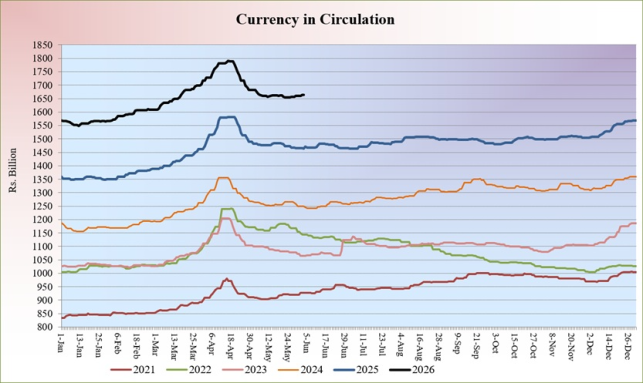
Macro-economic trends can be identified as a key factor influenced to estimate CIC. This mainly includes trends in gross domestic products, inflation, interest rates and external sector performance in general. When economies are growing the demand for CIC can be expected to further grow while inflation is also a factor demanding more cash for transaction motives than precautionary and speculative motives. Inflation measured by Colombo Consumer Price Index (CCPI) in Sri Lanka has recorded the highest ranging 60%-70% territory during 2022 supported by cost push factors and external sector imbalances. CIC during the CCPI higher period is reflected in higher volumes and with upward and different movements compared to the other years in
Figure 1 below reflecting a positive relationship between inflation and CIC movements in the specific period. CIC during the latter part of the year 2022 is reported with more downward trend compared to previous years and 4.67% as a percentage of Gross Domestic Product. Inflation targeting has been adopted in conducting monetary policy by the Central Bank of Sri Lanka CBSL from 2023 as per the provision given under the CBA. CIC after adopting inflation targeting monetary policy is slightly rising from 4% to 5% as a percentage of GDP by Q2 2025 and Q2 2026 in peak season of the year. inflation as measured by CCPI for April 2026 has accelerated to 5.4 percent compared to 2.2 recorded in March 2026. CIC could be further increase as a % of GDP due to upward trends in inflation supported by middle east war, energy price increase and exchange rate depreciation.
Figure 1. Currency in Circulation in recent years.
As per the depicted graph, CIC over the period has increased surpassing the highest annual peak during Sinhala and Hindu new Year in each year. Seasonal and event-based fluctuations are also identified as a key factor of CIC in the cultural calendar of SL. In addition to the main spike in April, the Christmas season towards the end of calendar year is also identified the second Peak time of currency demand. In addition, long weekends, together with public and bank holidays, are also likely to increase CIC to ensure sufficient cash in hands for spending in the short term. As far as the year 2022, which has reported higher inflation in SL, it is noted higher CIC level is reported during the period than the same period covered in 2023. This reflects that higher inflation is recorded with higher CIC compared to other periods. This further indicates that transaction purpose demand for currency is higher than any other purpose during the period. As far as the long term is concerned, amidst initiating and adopting digital based payment instruments after the Covid Pandemic in Sri Lanka, upward movements trends in CIC is still evidenced over the period. The requirement of knowledge on digital financial literacy is identified as an essential factor towards adopting the digital payments system to ensure safety and public trust on transitions settlements and record availability. In addition to the above influential factors, Sudden decisions taken by the domestic political environment, government and financial market decisions are also might be impacted on CIC in SL. In conclusion, it is evident that there are more CIC upward influential factors and CIC increases in absolute terms due to uncertainty arises in local and global factors reflecting more volatilities with upward trends during the period.
Influence for performance of the domestic economy has been adversely impacted with Climate changes risk and volatile global energy prices and uncertainty factors. Regarding the current scenario in SL, with the impact of adverse weather conditions followed by Ditwah cyclone, government spending for rations and relief packages for the effected householders has been surged. Natural disasters related damage will take time to stabilize the supply side factors in the affected areas, especially for agriculture related products. In addition, the inflationary pressure arising from geopolitical uncertainty and middle east war, surging for upward pressure on petroleum, oil, gas and electricity prices would be highly impacted to the cost of living and productivity. There might be further upward pressure in prices and CIC due to inflationary impact and government spending to settle the flood affected householders, subsidiaries and related expenses. Interest rates, cost of holding money, is another reason as cash is also a macroeconomic variable that impacts on CIC directly. lower interest rate under a relaxed monetary policy, CIC is expected to increase to ensure the expanding and promoting economic activities towards the potential GDP growth. Further, seasonal fluctuations, technological advancements, monetary policy decision in different types of interest rates including deposit rates, lending rates, government policies, tax revenues also play a key role in CIC determination in the market
| [10] | Chandrakamal, K., & Kumar, P. (2023). Less-cash or more-cash? Determinants and trends of currency in circulation in a panel of 17 economies (IES Working Paper No. 32/2023). Institute of Economic Studies, Faculty of Social Sciences, Charles University. |
[10]
. The same study evidence shows that shadow economy and tax avoidance, digital financial inclusion are influential factors on CIC.
CIC consists of notes and coins in circulation determined in denominations wise issuances to Banks. Structure of the currency notes denominations are also important factors which reflect the transaction patterns requirement specifically for retail and large value. Lower denominations are the most circulated currency in SL from Rs. 20, 50,100 and 500 notes reflecting the higher notes requirement to settle transactions on retail basis. Compared to the lower denominations of currency notes available in Sri Lanka, circulation time of higher denominations are quite lower reflecting the large value transactions settlement through the payment systems and other instruments and use for as a medium of storing value. Coins change relatively slowly compared to notes due to their intrinsic, essential and social aspects. Coins generate more seigniorage compared to notes. Main reasons for generating seigniorage are coins last more than 25 years, stay in circulation for a longer period, require less handling and generate interest over much longer time. As far as bank notes and coins are concerned, central banks face conflict situations whether central banks prioritize printing notes to cater to public preference or minting coins to generate more seigniorage
| [11] | Banknote Industry News. (2026, May 11). Banknote Conference, Day 1 (May 11): Snapshot, summaries: Circulating coins—Intrinsic, essential, social [Email newsletter]. |
[11]
. Due to the slower change compared to banknotes, coins are stable products while banknotes are evolving much more frequently in respect of more redesigning, denomination structure changes, technological and security upgrades. Then banknotes are involved more frequently in currency cycle including printing, issuances, processing, and up to destruction with more usage of machinery and equipment.
CIC plays a vital role in managing daily liquidity in the market in conducting daily monetary policy operations in addition to meeting the public demand for money. Literature on CIC forecasting has been enriched to facilitate liquidity management, financial market analysis, monetary policy operations and review, financial decisions and for requirement of the government and the public. In addition, for the currency management purposes regarding to support procurement requirement, printing, delivering orders, issuing and ensure availability of legal tender. Forecasting currency requirements in Central Banks is calculated based on various methods due to the variation and fluctuation in seasonality, supply side conditions, economic growth, inflation projections, replacements with other demanding factors which may not be easy to forecast using one best fit model. Issuing authorities may have well sophisticated technical methods to forecast currency in circulation accurately with lower errors. It is noted that several forecasting modules are estimated based on currency outgoing, circulation, growth rate method and customized methods which are justifiable with advanced technical analysis and other specific factors. In this study, CIC will be forecasted using a statistical model, best fit for the daily basis data range during the period given in quantitative analysis.
Printing bank notes and minting coins involves considerable amount of higher cost. Coin minting costs are higher compared to the printing cost of currency notes. Further, coins are durable for more than 10 years compared to the notes where currency sorting, processing and destruction are required which indicates in the expected parameters of processing machines. However, in a CIC continuously growing environment, decisions on denomination structure, printing requirements, delivering the procurement on time, target group (for lower, middle and higher denominations), machine calibrations and market developments are also important factors to ensure availability of legal tender for the currency.
Although printing cost of banknotes is lower compared to minting cost of coins, notes are involved with higher processing cost in frequent currency cycles. In this regard, innovative products for printing banknotes ensuring durability and sustainability have been introduced for banknote substrates. Alternatively, adopting digital based payment instruments from paper-based instruments might serve national wealth spent on bank notes that involved with high security printing authorities. Substrate for currency notes printing are also evolving from cotton based, polymer base towards hybrid types that ensure durability and safety. As per the High Security Printing Asia 2025 Conference, Durasafe/ Safeguard bank note substrates have been introduced in some printing authorities as the substrate for a sustainable bank note printing technology under the safer, secure and greener innovations. In empirical literature, milestones of the cash cycles (procurement, consignments, lodgments, issuing, depositing, currency sorting and verification, destruction process) are expected to be longer in upgraded substrates compared to the pure cotton or linen based substrates. Therefore, adopting innovative solutions with upgraded substrates in bank note printing guides towards durability and sustainability in banknote industry.
As discussed, Currency in Circulation, Cash is a social connector. It bridges the gap between economic value and human interaction, ensuring that wealth is not locked in abstract systems but can flow freely among people. Cash makes it indispensable for financial inclusion, trust-building, and resilience in the cash cycle. In this paper, literature on CIC forecasting will be discussed in section 2. Rational for methodology selection is described in section 3 of this paper. Recent trends in currency usage are discussed under section 4 with an aim to give a brief understanding of evolving trends in bank note industry and upgraded security features, upgraded substrate to ensure durability and sustainability. The results and findings are discussed in section 5. Recommendations and conclusions are made in section 6 of this paper.
2. Motivation /Literature on Forecasting Currency in Circulation
Literature on CIC overwhelmingly demonstrates as a main element of Monetary base of the central bank. Theoretical literature describes that Monetary base consists of two main components of which Currency in Circulation is a major part of the base money or high-powered money of an economy directly created by the central banks or monetary authority of the country
| [12] | Mishkin, F. S. (2019). The economics of money, banking, and financial markets (12th ed.). Pearson. |
[12]
. CIC, which is a liability under the balance sheet of the Central Bank, includes all the physical banknotes and coins held by the public (individuals and firms) outside of commercial banks. Central Banks have the monopoly to create monetary base of the economy in conducting monetary policy to influence inflation, interest rates, credit conditions and ultimately ensure price stability, economic growth towards the potential path of GDP.
Evidence in the literature on forecasting CIC is enriched with different types of data analysis techniques that include Exponential Smoothing Techniques, determining currency demand equation and ARIMA type models. Seasonal ARIMA(SARIMA) is also a widely used model in forecasting CIC by many countries. Holt Winter Exponential Smoothing similar type modelling namely Exponential smoothing that considers Error, Trend and Seasonality has been used widely by both advanced and developed economies. Econometric based modules also are used to determine the CIC forecasting given the availability of macroeconomic related data. Daily Seasonal Adjustments (DSA) also an applicable model to forecast CIC since the complex seasonal patterns are analyses in DSA. Hybrid and advance models are being tested and used to forecast CIC combining traditional approaches, DSA and other modules. RegARIMA can be identified as a hybrid kind of model used by European countries.
Literature on forecasting CIC in different economies is found supporting with time series and econometric analysis. Two research are found regarding the CIC forecasting models in Sri Lanka. A study to forecast CIC in Sri Lanka contributed to forecasting model for currency demand in Sri Lanka using high frequent data covering three model using daily, weekly, monthly data for the period from 2001 to 2005
. Findings reveal that Sinhala Tamil New year, elections, Christmas and long weekends impact significantly on demand for CIC in Sri Lanka. Recommendations are given to use to forecast CIC in Sri Lanka with careful assessment of the current development in the economy. The recent study conducted also contributed to forecast currency demand in Sri Lanka Using VECM covering the period from 2001 to 2016 findings that deposit rates, inflation, GDP and dummy variables for the new year are Christmas are significant factors in explaining CIC in SL during the period
| [14] | Kulatunge, S. (2019). Modeling and forecasting currency demand in Sri Lanka: An empirical study. International Journal of Business and Social Science, 10(6), 62–73.
https://doi.org/10.30845/ijbss.v10n6p8 |
[14]
. The study has used long run econometric modelling techniques in determining single variables, models using macro-economic variables. ARIMA model in forecasting CIC is also included in the study and further recommends running an ARIMA model using daily basis data.
CIC as a percentage of GDP is also a good indicator that shows economic and financial development related information. A lower CIC to GDP ratio indicates more advanced, formalized and stable economy with higher degree of financial inclusion, adopting digital payment and public confidence in the financial system. Conversely, a higher ratio of CIC to GDP is noted in countries reflecting more informal economic activities, lower financial inclusion and greater reliance of physical cash. A study evidences more recent information on CIC variation across different countries in the study
| [15] | Bech, M. L., Faruqui, U., & Shirakami, Y. (2018). Payments are a-changin' but cash still rules. BIS Quarterly Review, March, 67–80. |
[15]
. Accordingly, 20 out of 25 selected countries the CIC, GDP ratio has increased while the ratio has decreased in countries China, Norway, Russia, South Africa and Sweden. Therefore, Central banks should consider CIC demand, digital based payment, online payments and growth of other payment instruments in determining and promoting alternative payments instruments.
Different monetary policy targeting regimes are also an important aspect in CIC. Monetary policy conducts under different targeting regimes identified as a timely requirement under the challenging economic environment by central banks. Monetary aggregates targeting, exchange rate targeting, inflation targeting can be evidenced as types of monetary policy targeting. Central bank of Sri Lanka adopted flexible inflation targeting monetary policy framework with implementation of CBA. In the flexible Inflation targeting monetary policy framework, inflation is expected to be maintained in a specified range around a targeted level. With a well-managed lower-level anchoring inflation expectation, incentive to hoard physical cash as a store of value may be limited with stable purchasing power. Forward guidance under the inflation targeting and inflation expectation outlook, improved consumer confidence and consumer behavior would help to hold money in their bank account rather than in physical forms subject to other conditions are favorable to hold money in the bank accounts. In case of Sri Lanka, with the enactment of CBA, monetary policy adopted with flexible inflation targeting framework maintaining 5 per cent inflation level as medium term target to guide the market. Given the moderate inflation above 5 per cent in current context, with external shocks, uncertainty in global energy prices and impact on the domestic price level, the CIC could be moved between 5 to 6 per cent of GDP.
Literature on forecasting CIC is evidenced and available covering advanced economies with emerging market economies too. Literature available in advanced economies includes advanced techniques in forecasting CIC in line with the CIC movements in annual calendar covered by cultural, religious festivals and monthly movements followed after the salary payments scenarios. In Sri Lanka also, a few studies on forecasting CIC could be found which limited to research purposes. CIC forecasting model in SL with updated data after 2016 is hardly found in the literature under the growing CIC environment. Further, important facts regarding notes and coins also help to improve knowledge and cash handling practices of the public. Therefore, practical knowledge of denominations, currency cycle, recent trends and development in relation to currency notes is elaborated to for enhanced decision in currency management. Further, a brief understanding of trends and development in currency usage in high security printing authorities is given in order for Sri Lanka to adopt a safer, secure and greener currency notes ensuring cost effective technology and aligning with adopted trends in other countries. Therefore, in this study, it is expected to fill the above existing gaps in literature and forecasting techniques adopted under the research and thereby to make recommendations and assessment of CIC for next year using the daily basis data for the period from 2016-2026. Based on the results and findings of estimated forecasting, model recommendations and suggestions are made for the better management of currency cycles, aligning with the recent trends in banknote industry.
3. Methodology
This study uses time series, secondary source, daily basis data available the Central Bank of Sri Lanka on CIC for the period from October 2013 – June 2026 published in daily economic indicators. Methodologies used under the previous studies were reviewed and accordingly the best fit model to forecast the CIC for the given period is forecasted using a type of autoregressive model introduced for analyzing and forecasting time series data
| [16] | Box, G. E. P., & Jenkins, G. M. (1976). Time series analysis: Forecasting and control. Holden-Day. |
[16]
. A widely used model for CIC forecasting was selected as the appropriate model for the analysis. Accordingly, two ARIMA models with seasonal dummies for April and December and automatic ARIMA models are estimated. The best fit model is selected based on the evaluation criteria of the estimated models. The ARIMA (p,d,q) model with AR and MA terms to forecast CIC in Sri Lanka during the period is given below. Major three parts of ARIMA model are:
AR (Autoregressive) part: dependence on past values
I (Integrated) part: differencing to achieve stationarity
MA (Moving Average) part: dependence on past forecast errors
Accordingly, the general form of the ARIMA model is identified in the foundational work in 1976.
Where:
= the time series value at time
= white noise error term
= backshift operator ()
= differencing operator of order
= AR polynomial of order
= MA polynomial of order
CIC movement is noted with seasonal dominance depicted in above figures and evidenced from previous studies. Therefore, to capture seasonality SAR and MAR terms are added to the model. Accordingly, SARIMA(4,0,4)(1,0,2)360 model with an additional two-year seasonal MA term is given in below equation.
DLCICt=C+AR(4)+MA(4)+SAR(360)+SMA(360)+SMA(730)(2)
The model forecasts daily changes in log currency in circulation by combining past values, past shocks, and seasonal cycles.
Forecasting equation for the daily basis data.
(3)
Terms in the equation
→ Constant (intercept).
AR (4) → Autoregressive terms up to lag 4 days ().
MA (4) → Moving average terms up to lag 4 days ().
SAR (365) → Seasonal autoregressive term at lag 365 (annual cycle, excluding leap year).
SMA (365) → Seasonal moving average term at lag 365.
SMA (730) → Seasonal moving average term at lag 730 (two-year cycle).
→ White noise error term.
Log difference of CIC was considered with the increase of the variance in level variable. Stationary tests are conducted using Augmented Dicky Fuller test for series CIC. The series was stationary at the 1
st difference in performing stationary test. SARIMA orders are identified using autocorrelation and partial autocorrelation functions of differenced series for 28 lags to the daily basis data. Accordingly, ARIMA (p,d,q) model was estimated using EViews 13 version. Further, Automatic ARIMA forecasting model also estimated using Max AR and MA terms as 4 and Max SAR and SMA terms as 2 with periodicity as 365. The best moder is selected with a comparison of coefficient and features of the model. The model estimated in this paper is, as an extension to ARIMA forecasting, suggested using updated, daily basis data
| [14] | Kulatunge, S. (2019). Modeling and forecasting currency demand in Sri Lanka: An empirical study. International Journal of Business and Social Science, 10(6), 62–73.
https://doi.org/10.30845/ijbss.v10n6p8 |
[14]
. Recommendation is made for future research and policy level decisions based on the findings of the estimated selected model under section 5 of this paper.
4. Recent Trends in Currency Usage and Challenges
BIN news indicates an estimated 800 billion banknotes are circulating globally with 5.5 per cent annual growth in volume. For Asia pacific region 495 billion banks note are in circulation with 6.9 percent volume growing in 2024. Bank note printing technology evolves over the period to ensure the public trust for secure, safer, greener and durable banknotes to ensure the availability of legal tender, ensuring public trust and minimizing counterfeit efforts. Therefore, High security printing authorities and Central Banks are required to consider Banknote printing in a balancing way under the strategic currency decision making on how to produce secure, safer, greener bank notes towards Zero carbon emissions with cost effectiveness. Bank notes substrates are also developing from cotton based, polymer based, varnished layered to hybrid types of substrates giving innovative solutions towards the green bank notes, durability and sustainability. The motivation for developing new featured substrate is to maintain public trust, reduce counterfeiting efforts, and leverage new technology. Trends in banknote printing evolved with cotton mix, polymer varnish layered substrate for the same design over the period.
Denomination structure of currency is also an important but manageable concept to facilitate the smooth floor of transactions. Regarding the denomination structure of currency, the criteria use by central banks and government authorities to determine the currency denominations includes transaction efficiency, public demand and preference, purchasing power and inflation, cost-effectiveness, minimise counterfeiting, the security, and illegal activity concerns for higher denominations
| [17] | Giesecke+Devrient Louisenthal. (2025). Denomination structure of currency: Criteria for central banks and government authorities. Louisenthal GmbH. |
[17]
. Widely recognized denomination rules for modern decimal currencies follow the system 1-2-5 as the spacing between denominations. The number of denominations vary by country. Denominations for currency notes in most of the countries are between 5-7. Eg. for USA with $1, $2, $5, $10, $20, $50, $100, for the Eurozone (7) with €5, €10, €20, €50, €100, €200, €500. Sri Lanka’s currency denominations now include eight notes from Rs. 20, 50, 100, 200, 500, 1000, 2000, and 5000 following the latest issuance of a commemorative circulation note of Rs. 2000. Some countries have discontinued higher or lower denominations in line with transaction patterns demand and timely requirements. A study reveals that more than 45 countries have already adopted polymer-based bank notes and by 2030 it is expected more than another 20 counties will abandon the use of cotton base notes and switch to polymer notes in their monetary and banking system
| [18] | Rafiei, A., Karimi, A., & Bodaghi, M. (2023). Polymer banknotes: A review of materials, design, and printing. Sustainability, 15(4), Article 3736. https://doi.org/10.3390/su15043736 |
[18]
. Therefore, it is evidenced that countries using cotton-based bank notes are adopting gradually to introduce polymer, linen, Varnish layered upgraded type substrates to print notes for at least few or specific denominations. Further it concludes and evidenced that polymer, Varnished or hybrid type bank notes are well performed in terms of safer, secure, greener bank note printing as well as cost effectiveness compared to traditional types of cotton-based substrates. Further it is evidenced that the polymer bank notes have 50% less destructive effects on the environment compared to cotton-based notes. BIN news shows, lifespan of polymer and hybrid type bank notes are more than three times higher than the cotton-based bank notes. In order to reduce the environmental impact of frequent life cycle of cotton-based notes and due to substantially larger CIC growth in the world, Cash sustainability is also an important topic as the Zero Carbon emission to be adhered by 2050 in bank note printings and security printing products. Thus, banknote industry is in the process of transitioning towards zero carbon emissions by focusing on the key strategies including sustainable substrate and materials, green bank note initiatives, renewable energy and efficiency, circularity and waste reduction etc. Innovations in bank note industry and printing technology ensure durability with secured and safer bank notes by lowering frequencies in printing, verification, sorting and destruction process. Despite introducing the innovative, advanced and upgraded substrates, counterfeiting activities has re-emerged in Canada regarding higher denomination, Polymer Bank notes revealed
| [19] | Banknote Industry News. (2026, April 9). Canada: Increase in CF notes // India: Tender in-house CS-feature manufacturing // UZB: Launch IF, IB // UK: Prop money // AI fraud kit targeting bank security: Canada—Increase in counterfeit banknotes [Email newsletter]. |
[19]
in Banknote industry news. Further, it elaborates on the professionalization of counterfeiting efforts in Canda to raise a higher level after introducing polymer notes in 2011. Therefore, counterfeiting efforts using recently introduced upgraded bank notes substrate are also emerging which requires to be considered by industry.
With regard to Journey of the Currency notes in Sri Lanka, It continues with 11
th series of cotton-based bank note introduced in 2010 under the designing theme of “development, prosperity and Sri Lankan dancers”. The whole series contains six denominations from Rs. 20, 50, 100, 500, 1000 and 5000. The year 2010 was economically well performed after end of the 30 years of Northeastern war in 2009. Market developments have been well absorbed, especially with ATMs, Cash machines and cash processing with necessary calibrating techniques. In addition, a commemorative circulation bank notes of Rs. 2000 was introduced to mark the 75
th anniversary of the CBSL in 2025. With this commemorative note, number of denominations in circulation has reached seven, indicating a need to revisit the required denominations for circulation and replace the lower denomination into coins. The expected life span of denomination depends on many factors including the substrate quality (Cotton/linen/polymer), security features, frequent usage and currency handling practices of the country etc. Durability of lower denominations for less than Rs. 500 notes compared to higher denominations seems lower due to more frequent usage for retail-based transactions. As per Banknotes evolve much more frequently with respect to redesigning, denomination, substrates change in line with technology and security upgrades compared to coins
| [3] | Banknote Industry News. (2026, May 12). Banknote Conference, Day 2 (May 12): Snapshot, summaries: Banknote Conference 2026 opening speech by Currency Research [Email newsletter]. |
[3]
. In this regard, it seems that currency notes in Sri Lanka also on its next evolving path of printing the same design with upgraded secure, safer and greener substrates.
With respect to bank notes, countries have been relying on the series of bank notes on average for about 10-15 years depending on denominations, combating counterfeiting, type of substrate, monetary or govt policies and global best practices for redesigning, denomination change, technology and security upgrades etc. Majority of countries prints bank notes with same design using polymer or hybrid materials to ensure safer secured and greener solutions towards sustainable bank note printing. Further, relying on the same substrate for a long period of time, exposure to the risk of counterfeiting efforts and more actions and resources towards implementing court proceedings are also required. Therefore, central banks are responsible for implementing the policy in currency management by introducing bank note series with upgraded substrates primarily to align with technology and to stay ahead of counterfeiting threads. Studies show that the medium lifespans of bank notes range between one year to five years
. Lifespan as developed using an algorithm by G+D currency technology stimulates the wear and tear on banknote in circulation, partly depends on the way it handles and security feature level. Central banks introduce security features every 10 years while others introduce them in 20 years which depend on the quality of substrate for banknotes and counterfeiting efforts reported. Counterfeiting efforts for bank notes are also reported in all countries from rare to frequent attempts.
CIC has been upward growing trend in the majority of countries with production, economic growth and in line with other macroeconomic variables. Despite the initiatives for digital payments and related instruments, CIC continues to rise globally. Further it has been observed that CIC growth is faster than the GDP growth in some economies due to various factors. Even in advanced economies, rapidly growing CIC is observed. Monetary Economics evidence that Cash paradox and the reasons for growing demand of CIC.
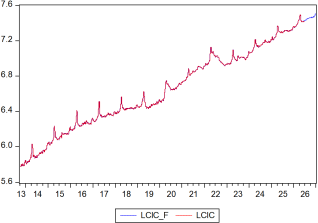
Figure 2. Growing CIC in Sri Lanka.
In Sri Lanka also, CIC is in its growing path with difference magnitudes indicated in above figure. It further can be explained by dividing the figure into three major periods. At the initial phase up to 2018, CIC shows a gradual but consistent increase reflecting the monetary expansion and liquidity requirements. CIC growth is relatively stable with less volatility except for April seasonal period. The middle phase from 2019 -2023 reflects acceleration of CIC compared to other two periods. A sharp rise in CIC is visible, reflecting a higher demand for CIC. Further, the economic crisis and higher inflation also reported during this middle phase of the above figure. Therefore, the period likely corresponds to structural changes in the economy, seasonal effects and policy-driven liquidity injections to a sharp increase of CIC. The third phase again stabilizes with continuous growth path of CIC with peak demands in April and December seasons and long weekend holidays related to cash demand. The figure confirms that Sri Lanka’s CIC is on a sustained growth path, shaped by both long-term monetary expansion and short-term seasonal effects. As per LCIC forecasted data for the six-month period, growing CIC movement is evidenced with the upward trends.
Considering the growing CIC demand despite the availability of other alternative payments instruments and platforms, cash remains as complementary to the other alternatives. Therefore, attention should be focused on cost effectiveness in delivering the CBA mandate regarding currency management by introducing upgraded hybrid substrates in bank note printing ensuring durability and sustainability, implementing innovative and strategic solutions for currency processing and currency management from short to medium term. Further denomination structure of notes and coins are suggested to revisit considering the changing requirement of denomination structure in line with economic growth and other factors. Denomination structure for notes Rs. 50, 100, 500, 1000 or 2000, 5000 with upgraded hybrid substrates and for coins Rs. 2, 5, 10 and 20 are suggested as appropriate in printing and minting in future orders with necessary approvals.
5. Results and Findings
As per the details given under the methodology, 2 ARIMA models were estimated. Considering the significant increase of CIC during April for Sinhala Tamil new year and December for Christmas, two dummy variables were added to capture the seasonal effect. A comparison of two ARMA models estimated is given below to select the best fit model for CIC forecasting during the period.
Table 1. Model comparison Summary.
Evaluation criteria | Model 1: ARMA (4,2) (1,1) | Model 2: Automatic ARIMA Forecasting (4,4) (1,2) |
AR Terms | AR (4) SAR (365) | AR (4), SAR (365) |
MA Terms | MA (2) SMA (365) | MA (4), SMA (365), SMA (730) |
R-squared | 0.250 | 0.295 |
Adjusted R² | 0.249 | 0.294 |
AIC | -8.404 | -8.418 |
BIC | -8.390 | -8.400 |
Durbin–Watson | 2.00 | 2.02 |
Significant Variables | All Variables | All coefficients except AR (2) |
Log Likelihood | 19516.13 | 19551.78 |
With respect to model fit and information criteria, model 2 indicates higher R2 and lower AIC/BIC explaining more variance and better parsimony. R2 is lower in ARIMA models due to the log difference of the series is considered for the estimation and therefore the series becomes noisier and explanatory power drops compared to the models that use raw or trending data series. Further ARIMA model is selected for forecasting and capturing autocorrelation rather than maximizing R2. Therefore, model fit is better judged by interpreting lower AIC/BIC, log likelihood and residual diagnostics. Autocorrelation and stability indicate in DW statistics around 2 and Stability Root within the circle of 1. In terms of significant coefficients, all coefficients are significant in model 2 estimated using automatic ARIMA forecasting. Coefficients in Model 1 for April holiday dummy variable is highly significant, indicating a robust seasonal effect while December Season is not significant. AR and MA terms of the models are also significant. Considering the significant of coefficients, coefficients diagnostics, residual diagnostics and stability of the model given in the above comparison, Automatic ARIMA forecasting model is selected as the appropriate model to forecast CIC capturing short run shocks, seasonal dynamics in the annual cycles during the period. The summary of the selected Automatic ARIMA model is given below.
Table 2. Summary of selected model.
Automatic ARIMA Forecasting Selected dependent variable: DLOG(CIC) Date: 06/22/26 Time: 13:28 Sample: 10/01/2013 6/17/2026 Included observations: 4642 Forecast length: 197 Model maximums: (4,4) (2,2) Regressors: C Number of estimated ARMA models: 225 Number of non-converged estimations: 0 Selected ARMA model: (4,4) (1,2) AIC value: -8.4182326474
Variables | Coefficients | Standard Error | t - stat | P value |
C | 0.000349 | 0.000161 | 2.172980 | 0.0298 |
AR(1) | 1.173058 | 0.067319 | 17.42527 | 0.0000 |
AR(2) | 0.105052 | 0.115427 | 0.910122 | 0.3628 |
AR(3) | -0.969395 | 0.083830 | -11.56375 | 0.0000 |
AR(4) | 0.493357 | 0.037996 | 12.98431 | 0.0000 |
SAR(365) | 0.999975 | 0.000172 | 5814.364 | 0.0000 |
MA(1) | -0.952737 | 0.067509 | -14.11268 | 0.0000 |
MA(2) | -0.312305 | 0.100521 | -3.106850 | 0.0019 |
MA(3) | 0.936981 | 0.062574 | 14.97386 | 0.0000 |
MA(4) | -0.299236 | 0.033551 | -8.918790 | 0.0000 |
SMA(365) | -0.848233 | 0.010253 | -82.73175 | 0.0000 |
SMA(730) | -0.149303 | 0.010062 | -14.83853 | 0.0000 |
SIGMASQ | 1.21E-05 | 1.18E-07 | 102.6969 | 0.0000 |
Table 3. Evaluating criterion of the selected model.
Evaluation Criteria | Coefficients | Evaluation Criteria | Coefficients |
R-squared | 0.295861 | Mean dependent var | 0.000351 |
Adjusted R-squared | 0.294035 | S.D. dependent var | 0.004144 |
S.E. of regression | 0.003482 | Akaike info criterion | -8.418233 |
Sum squared resid | 0.056115 | Schwarz criterion | -8.400190 |
Log likelihood | 19551.72 | Hannan-Quinn criter. | -8.411885 |
F-statistic | 162.0820 | Durbin-Watson stat | 2.022206 |
Prob(F-statistic) | 0.000000 | | |
The autonomous CIC demand without any of the factors are also indicated as positively significant by 0.0054 percent daily, 0.2 percent per month and 2 per cent per year indicating the base line CIC is growing slowly over the period. Short run dynamics indicates in the model coefficients in AR, MA and seasonality in SRA and SMA terms. Highly significant positive AR(1) indicates the impact of daily positive shocks to CIC while AR(4) shows reinforcing short cycle in weekly horizon period. AR(2) and AR(3) of the model indicate the CIC adjustments after 2-3 days around the mean. Shock adjustments to LCIC indicate in significant positive and negative MA coefficients showing complex short run correction. Further, MA(4) strong significant negative coefficients reveal strong correction after weekly shocks to CIC. Seasonality captures in SAR significant coefficients for 365 days is 99 percent indicating CIC yearly cycle dominates with annual persistence including April new year, December season and monthly seasons. SMA (365) negative significant coefficient shows that the annual shocks are corrected downward at coefficient ratio of 80 percent. SMA (730) coefficients suggest that shocks in CIC cycles corrected within two years are also relevant. As per significant SIGMASQ, lower S.E. combined with strong seasonal structure, the model can be useful for short run to long run horizon forecasting and operations in cash planning. Daily cash management operations should be handled in line with a seasonality calendar covering Sinhala Tamil New year season, Christmas season, religious festivals public/ Mercantile holidays, salary pay cycles, govt cash transfer days and tax deadlines.
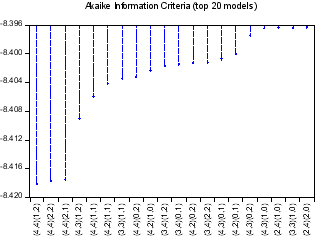
In terms of goodness of the model fit, DW statistics and F statistics are within the evaluation criteria and well specified indicating residuals are not serially correlated and overall model validity with p<0.000 for F statistic. R2 and adjusted R2 are 29.5 per cent, reasonably explain CIC variation, typical for differenced series. Residuals of the model are not autocorrelated, indicating the D W statistics 2. AIC is the largest and best among all 20 selected models, meaning it balances complexity and efficiently. With the significance of all coefficients, residual diagnostics and stability of the estimated model, the model is useful in short to medium term forecasting up to two-year period capturing daily, weekly dynamics and annual seasonality.
Figure 3. AIC of top 20 and selected models.
The figure depicting AIC criteria, for the top 20 models, shows the selected ARIMA(4,4)(1,2) model represent the lowest AIC indicating the most parsimonious model for CIC forecasting. Forecasting using the estimated Automatic ARIMA model specification up to December 2026 end is depicted in below figure.
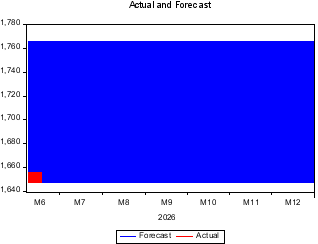
CIC actual and forecast combining graph given by EViews is depicted below. It shows an upward trend with annual and monthly cyclical movements dominating seasonal patterns of currency demand, reaching maximum in December during the forecasted horizon for next six months.
Figure 4. CIC Actual and forecasting up to December 2026.
According to the forecasted model, CIC for the next six-month period is on its growing path with deviations towards Rs. 1,800 mn in December 2026. Monthly movements consist of weekly deviations as explained in AR and MA term coefficients. This forecasted amount of CIC is subject to change with any of the uncertainties that may have impact on money demand and supply including monetary and fiscal policy decision changes, importation related global oil prices and exchange rate uncertainties kind of scenarios.
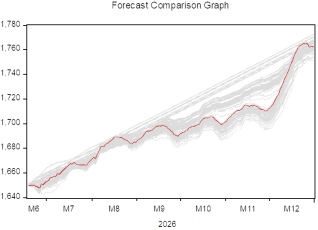
Forecast comparison graph indicates a comparison of all estimated models to verify whether the selected model represents all modules. Forecast comparison graph depicted below is in the middle and average of 225 forecasts performed in Automatic ARIMA forecasting mechanism, which is difficult to perform in estimating 225 models by running separate models. Forecast comparison graph captures daily, weekly dynamics in CIC movements to monthly figures. Further, seasonal dynamics for April and December months are also reflected with significant upward trends and downward adjustments by next month.
Figure 5. CIC Forecast Comparison Graph.
Above forecast comparison graph well represents the 225 forecasted lines in the model and can be used as a reliable model for CIC forecasting and policy decision purposes. Therefore, the forecasted model confirms high accuracy, low bias, and strong reliability. CIC is expected to rise gradually through 2026, supporting both price stability, financial stability and other influential factors in global and domestic market.
6. Conclusion and Recommendations
CIC in Sri Lanka moves on its continuous growing path despite the initiatives on digital transactions with the enhanced level of digital financial literacy. CIC plays a central role in contributing towards achieving central bank objectives of price stability and maintaining financial stability both. CIC is not just a technical measure of money supply. It is a cornerstone of central bank policy. By carefully managing CIC, central banks achieve their dual mandate of price stability and financial stability. Literature on CIC forecasting and modelling are enriched for most of the countries with updated data and modelling. Literature available for Sri Lanka is limited to few studies which has employed ARDL and ARIMA model to forecast CIC. The two models discussed in previous studies have employed a widely used Autoregressive model for short term forecasting and ARDL for macro-economic model forecasting. The previous study
| [14] | Kulatunge, S. (2019). Modeling and forecasting currency demand in Sri Lanka: An empirical study. International Journal of Business and Social Science, 10(6), 62–73.
https://doi.org/10.30845/ijbss.v10n6p8 |
[14]
suggested to estimate ARIMA model using daily data also. This paper is written to fill the existing literature gap in Sri Lanka on CIC forecasting, recent trends and challenges with existing limited empirical evidence and forecasting techniques that has been performed using data before 2016 and suggestions therein. Recent trends and challenges on Bank note industry are elaborated aiming to better understanding of having upgraded substrates which have been involved with high security features, ensuring secure, safer, and greener banknote in procuring printing authorities aligning with technology, innovations towards sustainability. Bank Note industry news indicates that banknotes evolve much more frequently with respect to redesigning, denomination change, with security features and upgraded substrates
| [11] | Banknote Industry News. (2026, May 11). Banknote Conference, Day 1 (May 11): Snapshot, summaries: Circulating coins—Intrinsic, essential, social [Email newsletter]. |
[11]
. Recent trends in bank note printing involve the upgraded substrate with high security features using the same existing design to ensure adherence with new innovations to minimize counterfeiting and to ensure public trust in currency.
A widely used methodology, ARIMA model for CIC forecasting was used for the data analysis from M10 2013 to M06 2026. Sample of 4,642 daily basis, secondary sourced CIC data series are stationary at level I, AR and MA terms are allocated based on ACF and PACF functions for 28 lags. The model is estimated employing automatic ARIMA forecasting tool. In order to capture seasonality, SAR 365, SMA 365 and SMA 730 terms have applied to the model. SARIMA (4,0,4) (1,0,2) 365 is estimated employing log difference of CIC using automatic ARIMA forecasting tool in EViews. According to the estimated forecasting model, CIC indicates a growing upward trend with strong annual seasonality and well contained short run persistent during the forecasting horizon up to M12 2026. All coefficients in the model are highly significant with other parameters are within the expected level for residual and stability diagnostic tests. CIC model forecasting initiates with significant positive coefficient with tiny drift, as autonomous factor of CIC growth. The strong significant annual seasonality evidenced, CIC demand spikes are largely identified as seasonal rather than structural trends shift. Seasonality is covered with public/mercantile holidays, salary-pay cycles, government cash-transfer days, school fee windows, religious festivals (Sinhala and Tamil New Year, Vesak, Ramadan/Eid, Christmas), and tax deadlines. In addition to the above events, elections schedules also may impact on CIC demand. As per forecasted CIC up to M12 2026, CIC shows moderate upward growth line with small variations below Rs. 1,800 mn. The estimated figure of Rs. 1,800 mn. may subject to change with deviated inflation than the targeted level of 5 per cent, and other uncertainty factors that may have significant impact towards upward trend in CIC. Further, CIC as a percentage of GDP will move towards 6 percent with lowering economic growth.
Based on the findings of the estimated model, operational and policy level recommendations can be made for calendar based liquidity management strategy subject to seasonal patterns of cash demand, pre announce and pre-position models in setting open market operations, standing facilities and currency issuances related logistics management, short run shock absorption rule for deviations, currency issuances related logistics and denomination management, vault management strategy, coordination with fiscal and payment authorities, digital payments and cash alternative methods for seasonal demand patterns, building contingency buffers in currency management. Regarding risk management of operational activities, establishing a monitoring protocol where significant deviations trigger review of cash supply logistics and implementing potential corrective measures are recommended to ensure the availability of actual requirement of notes and coins in required quantities to ensure price and financial stability objectives and further ensure public trust on currency. Policy communication strategies could be used to guide stakeholders’ expectations on currency demand and shaping the cash requisition of LCB submitted to CBSL. With regard to higher level policy recommendations, liquidity management strategy and operations in daily basis activities under the monetary policy, reducing volatility in CIC through anticipatory cash issuances to ensure transmission, rate changes, forward guidance and then to manage inflation, to promote financial inclusion during the high demand for cash in annual CIC and improve efficiency are made considering the findings of robust, efficient model estimated for CIC forecasting using the data from 2013 to 2026.
Suggestions are made to revisit the requests of cash requisitions, processing, issuances, deposits acceptance process from banks or authorized institutions and towards the destruction process to identify lapses and for further improvements regarding the operational activities of cash management in line with recent trends in strategic currency managements, technology, innovative solutions introduces and updates from bank note industry and security printworks products in delivering the legal tender of the currency within the country ensuring secure, safer, greener and sustainability in maintaining public trust on currency. In addition, effective currency management within the broader framework of liquidity management between central banks and commercial banks must be aligned and integrated with the Currency in Circulation (CIC) forecasts ensuring smoother processing of currency operations. Further refinement of this study is recommended by exploring the application of the ARIMAX model. Incorporating relevant macroeconomic variables into the autoregressive framework using daily data could enhance predictive accuracy and provide deeper insights into currency demand and liquidity patterns.
Abbreviations
ARIMA | Auto Regressive Integrated Moving Average |
BIN | Bank Note Industry News |
CBA | Central Bank of Sri Lanka Act |
CIC | Currency in Circulation |
CCPI | Colombo Consumer Price Index |
CBSL | Central Bank of Sri Lanka |
GDP | Gross Domestic Product |
SARIMA | Seasonal Auto Regressive Integrated Moving Averqage |
Conflicts of Interest
The author declares no conflicts of interest.
References
| [1] |
Banknote Industry News. (2026, May 13). Banknote Conference, Day 3 (May 13): Snapshot, summaries, keynote speeches—Keynote speech: Central bank policy in an evolving cash landscape (Bundesbank) [Email newsletter].
|
| [2] |
Banknote Industry News. (2026, May 1). Global Currency Forum: Snapshots of Day 4—Keynote speech and innovation sessions: Bundesbank: Foundations of resilience—The role of cash and the digital euro [Email newsletter].
|
| [3] |
Banknote Industry News. (2026, May 12). Banknote Conference, Day 2 (May 12): Snapshot, summaries: Banknote Conference 2026 opening speech by Currency Research [Email newsletter].
|
| [4] |
Bouis, R., Capelle, D., Dell'Ariccia, G., Erceg, C. J., Martinez Peria, M. S., Sy, M., Teoh, K., & Vandenbussche, J. (2025). Navigating trade-offs between price and financial stability in times of high inflation (Staff Discussion Note No. 2025/003). International Monetary Fund.
https://doi.org/10.5089/9798229005135.006
|
| [5] |
Khatat, M. E. H. (2018). Monetary policy and models of currency demand (IMF Working Paper No. 18/028). International Monetary Fund.
https://doi.org/10.5089/9781484341926.001
|
| [6] |
Biljanovska, N., Chen, S., Igan, D. O., Nier, E., & Valencia, F. (2023). Macroprudential policy effects: Evidence and open questions (Departmental Paper No. 2023/002). International Monetary Fund.
https://doi.org/10.5089/9798400226304.087
|
| [7] |
Nanayakkara, P. K. M. (2024). The evolving role of the Central Bank of Sri Lanka towards achieving economic stability and growth: A critical legal analysis. In Proceedings of the University of Colombo Annual Research Symposium 2024 (p. 146).
|
| [8] |
Friedman, M. (2008). Quantity theory of money. In S. N. Durlauf & L. E. Blume (Eds.), The New Palgrave dictionary of economics (2nd ed., pp. 1–31). Palgrave Macmillan.
|
| [9] |
McCallum, B. T., & Nelson, E. (2010). Money and inflation: Some critical issues. In B. M. Friedman & M. Woodford (Eds.), Handbook of monetary economics (Vol. 3, pp. 97–153). Elsevier.
|
| [10] |
Chandrakamal, K., & Kumar, P. (2023). Less-cash or more-cash? Determinants and trends of currency in circulation in a panel of 17 economies (IES Working Paper No. 32/2023). Institute of Economic Studies, Faculty of Social Sciences, Charles University.
|
| [11] |
Banknote Industry News. (2026, May 11). Banknote Conference, Day 1 (May 11): Snapshot, summaries: Circulating coins—Intrinsic, essential, social [Email newsletter].
|
| [12] |
Mishkin, F. S. (2019). The economics of money, banking, and financial markets (12th ed.). Pearson.
|
| [13] |
Dheerasinghe, R. (2006). Modelling and forecasting currency in circulation in Sri Lanka. Staff Studies, 36(1–2), 37–72.
https://doi.org/10.4038/ss.v36i1.1230
|
| [14] |
Kulatunge, S. (2019). Modeling and forecasting currency demand in Sri Lanka: An empirical study. International Journal of Business and Social Science, 10(6), 62–73.
https://doi.org/10.30845/ijbss.v10n6p8
|
| [15] |
Bech, M. L., Faruqui, U., & Shirakami, Y. (2018). Payments are a-changin' but cash still rules. BIS Quarterly Review, March, 67–80.
|
| [16] |
Box, G. E. P., & Jenkins, G. M. (1976). Time series analysis: Forecasting and control. Holden-Day.
|
| [17] |
Giesecke+Devrient Louisenthal. (2025). Denomination structure of currency: Criteria for central banks and government authorities. Louisenthal GmbH.
|
| [18] |
Rafiei, A., Karimi, A., & Bodaghi, M. (2023). Polymer banknotes: A review of materials, design, and printing. Sustainability, 15(4), Article 3736.
https://doi.org/10.3390/su15043736
|
| [19] |
Banknote Industry News. (2026, April 9). Canada: Increase in CF notes // India: Tender in-house CS-feature manufacturing // UZB: Launch IF, IB // UK: Prop money // AI fraud kit targeting bank security: Canada—Increase in counterfeit banknotes [Email newsletter].
|
| [20] |
Giesecke+Devrient. (2025). The life span of money.
https://www.gi-de.com/en/spotlight/technology-talk/how-long-does-paper-money-last
|
Cite This Article
-
APA Style
Liyanage, R. D. (2026). Forecasting Currency in Circulation in Sri Lanka and Recent Trends. International Journal of Economics, Finance and Management Sciences, 14(4), 301-313. https://doi.org/10.11648/j.ijefm.20261404.16
 Copy
|
Copy
|
 Download
ACS Style
Liyanage, R. D. Forecasting Currency in Circulation in Sri Lanka and Recent Trends. Int. J. Econ. Finance Manag. Sci. 2026, 14(4), 301-313. doi: 10.11648/j.ijefm.20261404.16
Copy
|
Download
AMA Style
Liyanage RD. Forecasting Currency in Circulation in Sri Lanka and Recent Trends. Int J Econ Finance Manag Sci. 2026;14(4):301-313. doi: 10.11648/j.ijefm.20261404.16
Copy
|
Download
-
@article{10.11648/j.ijefm.20261404.16,
  author = {Rohini Dunuwita Liyanage},
  title = {Forecasting Currency in Circulation in Sri Lanka and Recent Trends},
  journal = {International Journal of Economics, Finance and Management Sciences},
  volume = {14},
  number = {4},
  pages = {301-313},
  doi = {10.11648/j.ijefm.20261404.16},
  url = {https://doi.org/10.11648/j.ijefm.20261404.16},
  eprint = {https://article.sciencepublishinggroup.com/pdf/10.11648.j.ijefm.20261404.16},
  abstract = {Currency in Circulation (CIC) in Sri Lanka moves with its upward growing path dominating annual seasonal patterns with short run dynamics. As per Central Bank of Sri Lanka Act, currency issuing and management is a major function to ensure the availability of legal tender for currency in the country. This paper aims to estimate CIC forecasting model using daily basis, secondary sourced data from 2013 to 2026, filling the existing gaps in CIC forecasting using daily basis data, suggested in literature, elaborating the recent trends in banknote industry which may be useful for improved currency management and related decision making in delivering the currency management process. The estimated Automatic SARIMA (4,0,4) (1,0,2) 365 determined with an additional two-year seasonal MA term forecasting model indicates significant relationships among DLCIC and all coefficients capturing short term daily dynamics, annual seasonality and biannual seasonality. According to the forecasting model, strong annual seasonality in CIC growth is evidenced with short run shock persistence and adjustments. Liquidity demands spikes are largely seasonal driven than structural trends shift. Coefficient diagnostic, residual diagnostics and stability test statistics indicate the model is stable and can be used for short to medium term CIC forecasting and in shaping policy decisions including liquidity management, market operations, currency vault management and risk management. The paper includes importance of redesigning, determining denomination structure and requirement of adhering upgraded substrates in banknotes printing to ensure secure, safer, greener banknotes towards sustainability and to ensure public trust on currency.},
 year = {2026}
}
Copy
|
Download
-
TY  - JOUR
T1  - Forecasting Currency in Circulation in Sri Lanka and Recent Trends
AU  - Rohini Dunuwita Liyanage
Y1  - 2026/07/30
PY  - 2026
N1  - https://doi.org/10.11648/j.ijefm.20261404.16
DO  - 10.11648/j.ijefm.20261404.16
T2  - International Journal of Economics, Finance and Management Sciences
JF  - International Journal of Economics, Finance and Management Sciences
JO  - International Journal of Economics, Finance and Management Sciences
SP  - 301
EP  - 313
PB  - Science Publishing Group
SN  - 2326-9561
UR  - https://doi.org/10.11648/j.ijefm.20261404.16
AB  - Currency in Circulation (CIC) in Sri Lanka moves with its upward growing path dominating annual seasonal patterns with short run dynamics. As per Central Bank of Sri Lanka Act, currency issuing and management is a major function to ensure the availability of legal tender for currency in the country. This paper aims to estimate CIC forecasting model using daily basis, secondary sourced data from 2013 to 2026, filling the existing gaps in CIC forecasting using daily basis data, suggested in literature, elaborating the recent trends in banknote industry which may be useful for improved currency management and related decision making in delivering the currency management process. The estimated Automatic SARIMA (4,0,4) (1,0,2) 365 determined with an additional two-year seasonal MA term forecasting model indicates significant relationships among DLCIC and all coefficients capturing short term daily dynamics, annual seasonality and biannual seasonality. According to the forecasting model, strong annual seasonality in CIC growth is evidenced with short run shock persistence and adjustments. Liquidity demands spikes are largely seasonal driven than structural trends shift. Coefficient diagnostic, residual diagnostics and stability test statistics indicate the model is stable and can be used for short to medium term CIC forecasting and in shaping policy decisions including liquidity management, market operations, currency vault management and risk management. The paper includes importance of redesigning, determining denomination structure and requirement of adhering upgraded substrates in banknotes printing to ensure secure, safer, greener banknotes towards sustainability and to ensure public trust on currency.
VL  - 14
IS  - 4
ER  -
Copy
|
Download





 Share This Article
 Twitter
 Linked In
 Facebook